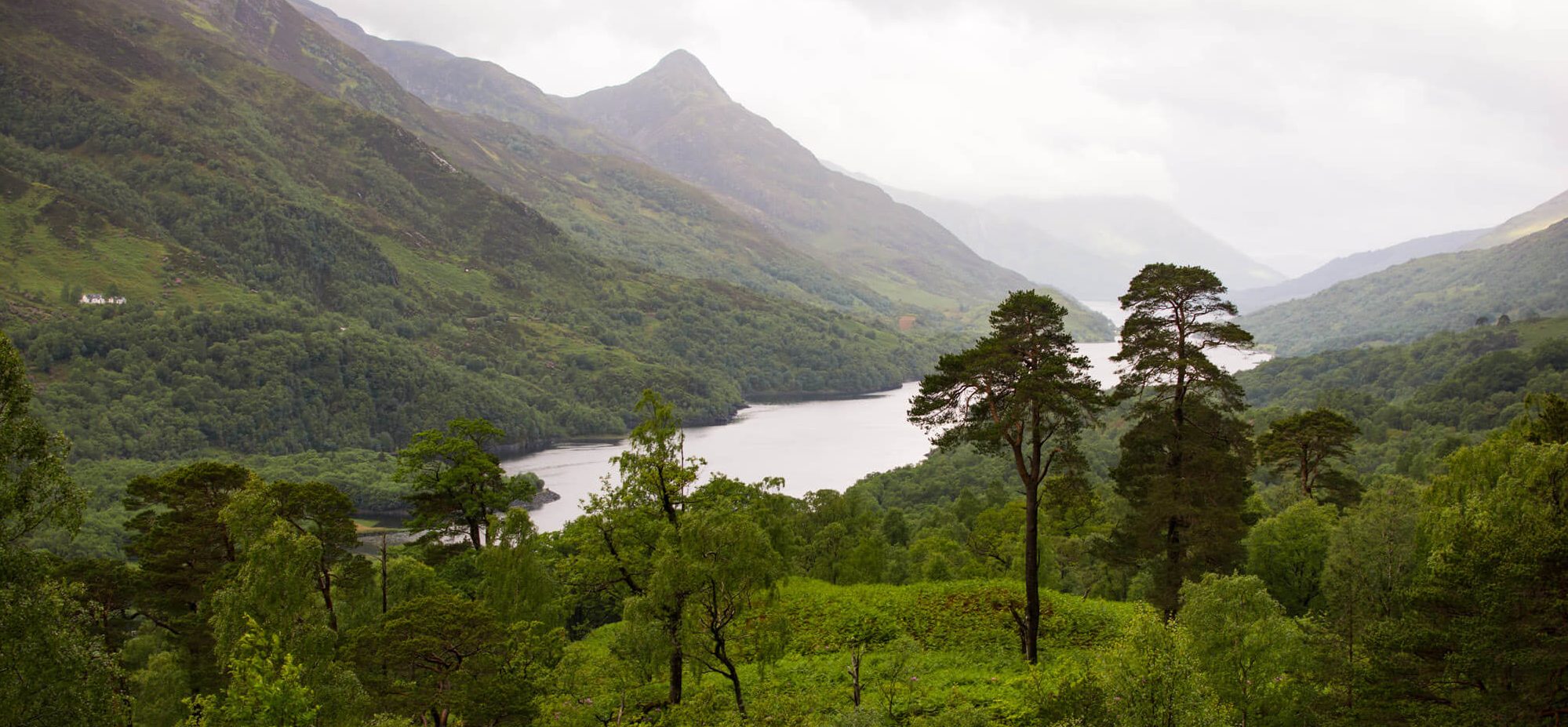
We aren’t done with Fly Fam adventures yet, and it’s finally time to relive our trip across the ditch to Tasmania. In March, Andy and I set off with my parents to Hobart, the capital city, for the start of a week of exploration.
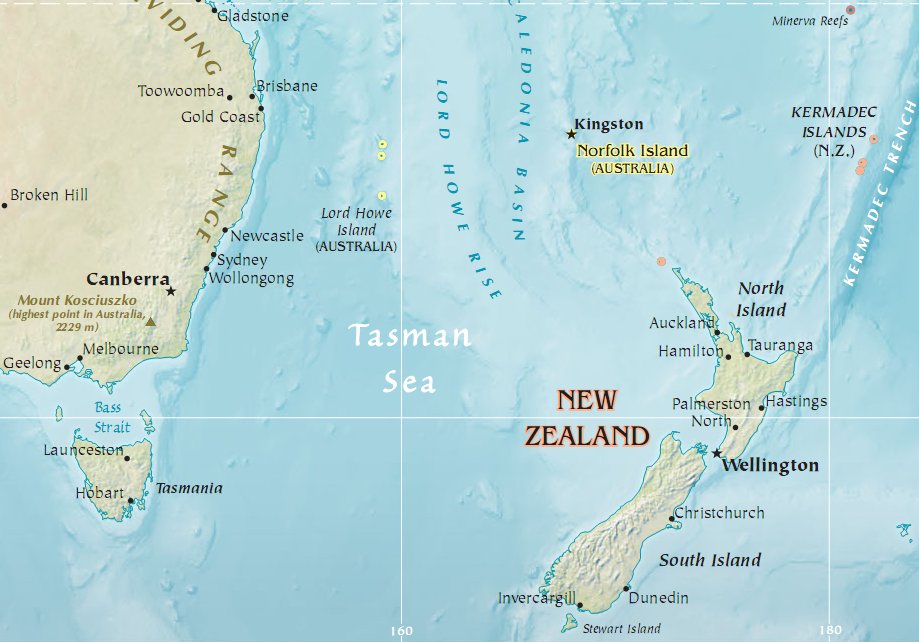
Hobart is actually south of Wellington, though not by much. However, there aren’t any direct flights from here, so we had to connect through Melbourne. We arrived in the beautiful (river) harbor city of Hobart on one of the hottest days of the year, and settled in for two nights. Andy and I visited Hobart and explored the surrounding area in late 2016, so I didn’t cart my camera around this time. Needless to say, it’s a fabulous city with lots of great historic neighborhoods and delicious food. We had a fabulous Greek meal this time around, and visited the botanic gardens and the Salamanca Market, among other highlights.
We didn’t come to Tasmania to base ourselves in the city this time, though. We were off on a road trip! Our first destination was Port Arthur, a historic settlement on a peninsula to the southeast of the island. Of course, our bucket list included seeing some native wildlife, so we stopped off at the Tasmanian Devil Unzoo on the way.
Being an “unzoo,” many of the creatures here are wild and can come and go, though the devils we encountered were spread amongst a couple contained habitats. It was a rainy day, so it wasn’t very busy, but the animals weren’t put off by the weather.
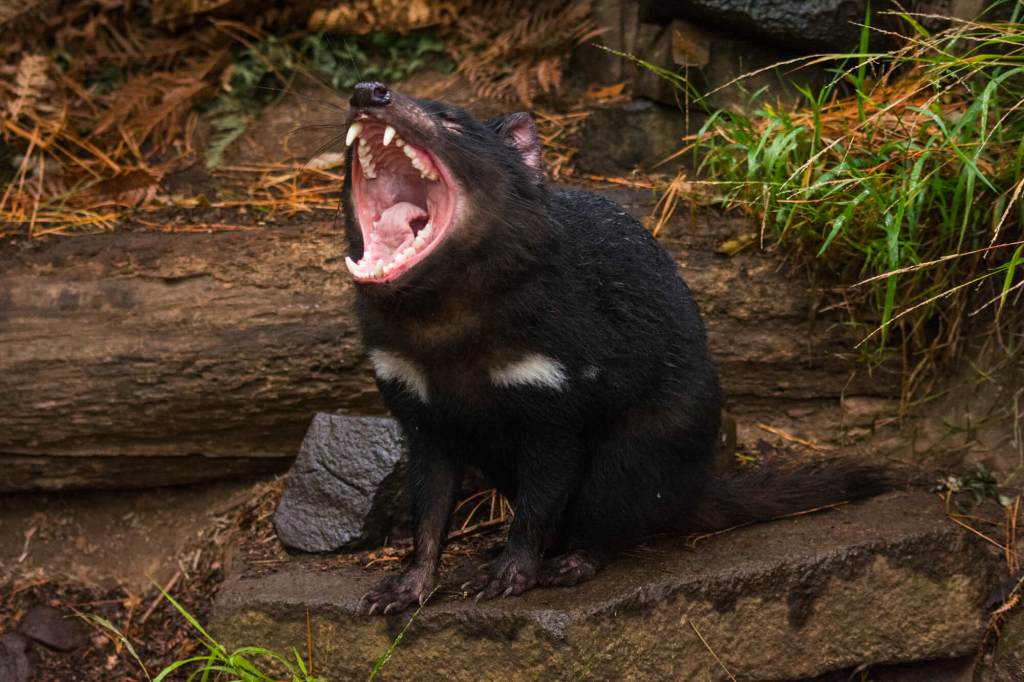
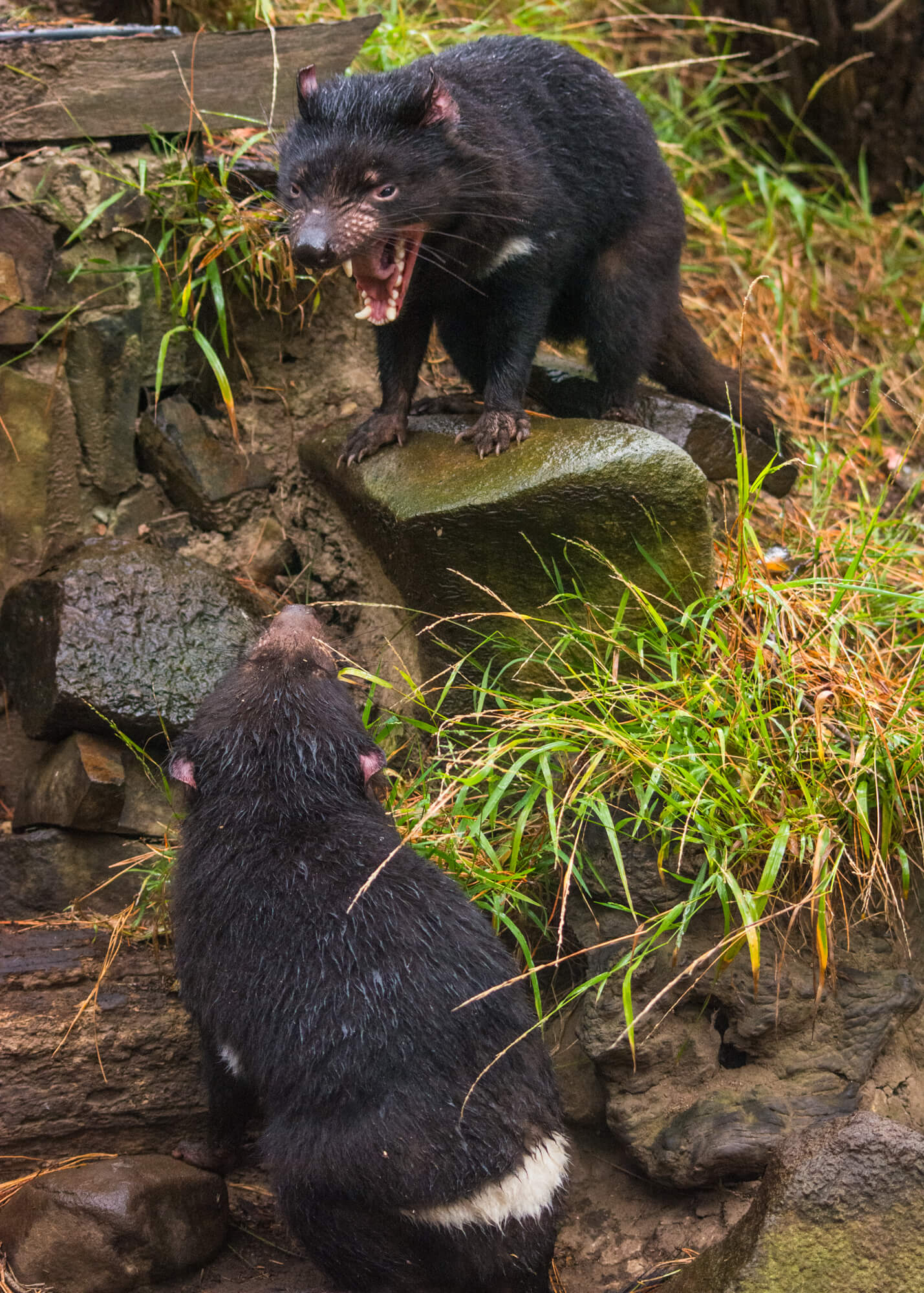
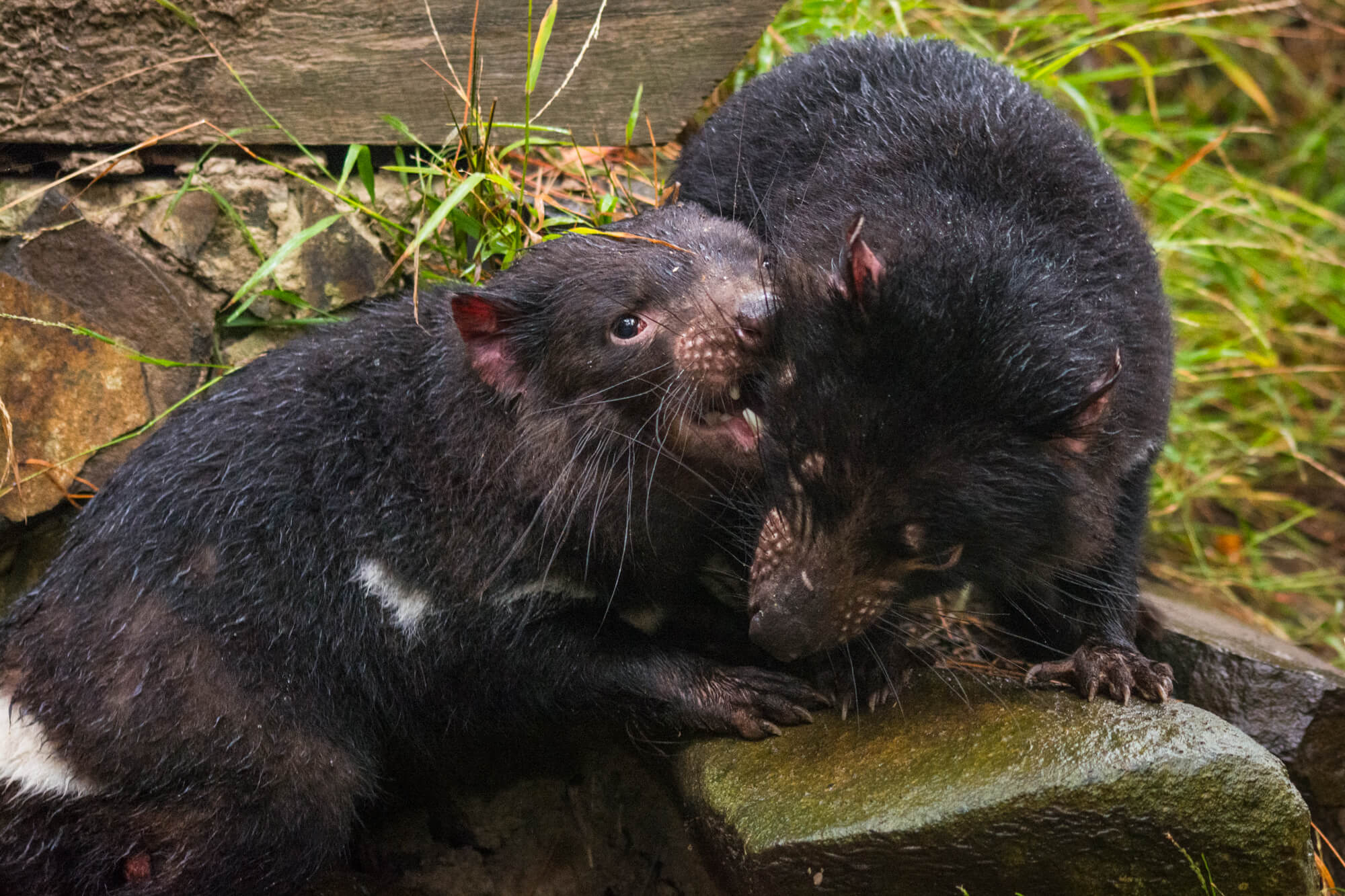
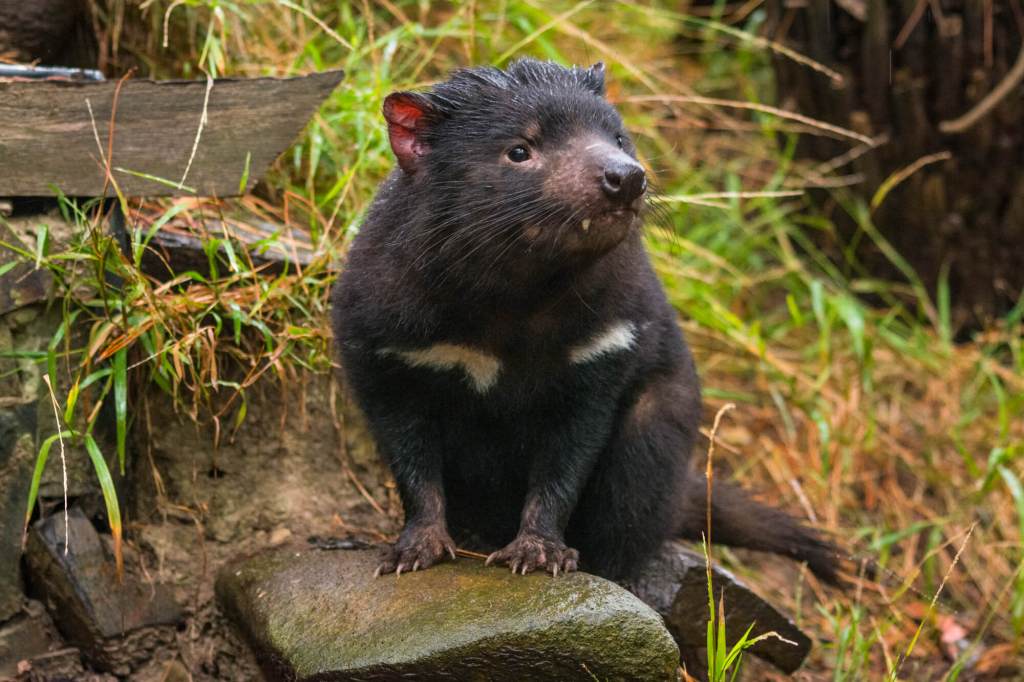
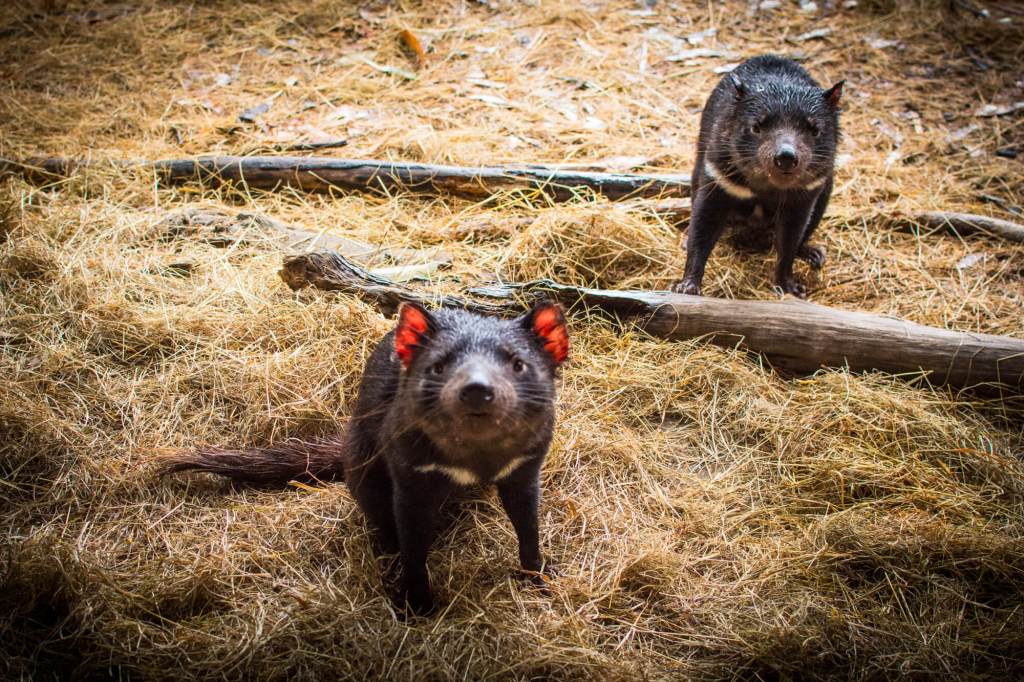
These two are sisters, if you can’t tell by the fighting. Their growls and calls sound especially vicious, hence the name, but they’re currently an endangered species that needs our protection, due to facial tumor disease and population decline. Zoos and places like this provide a key breeding area to keep population numbers viable. The disease actually hasn’t spread to the Tasman Peninsula where Port Arthur is located (thanks to a very narrow neck that cuts it off, complete with prevention to stop devils crossing either way), so this area is probably the best place to be a Tazzy devil at the moment.
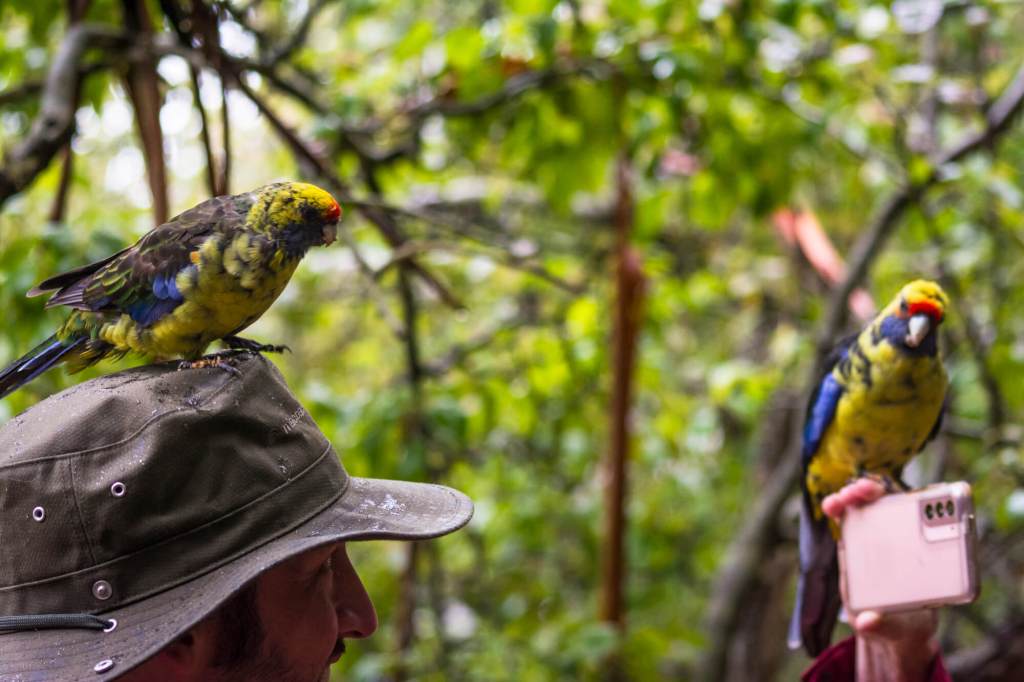
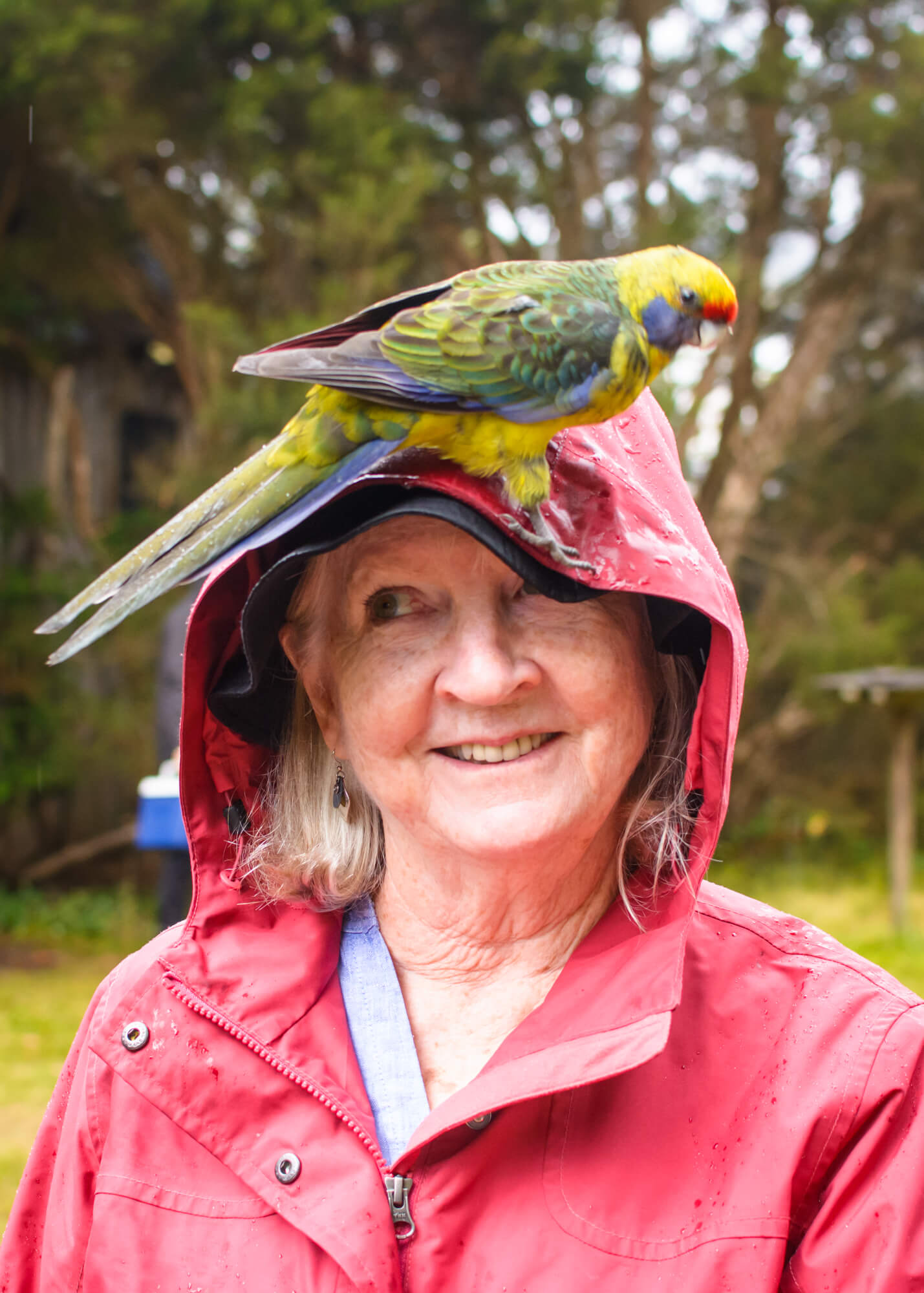
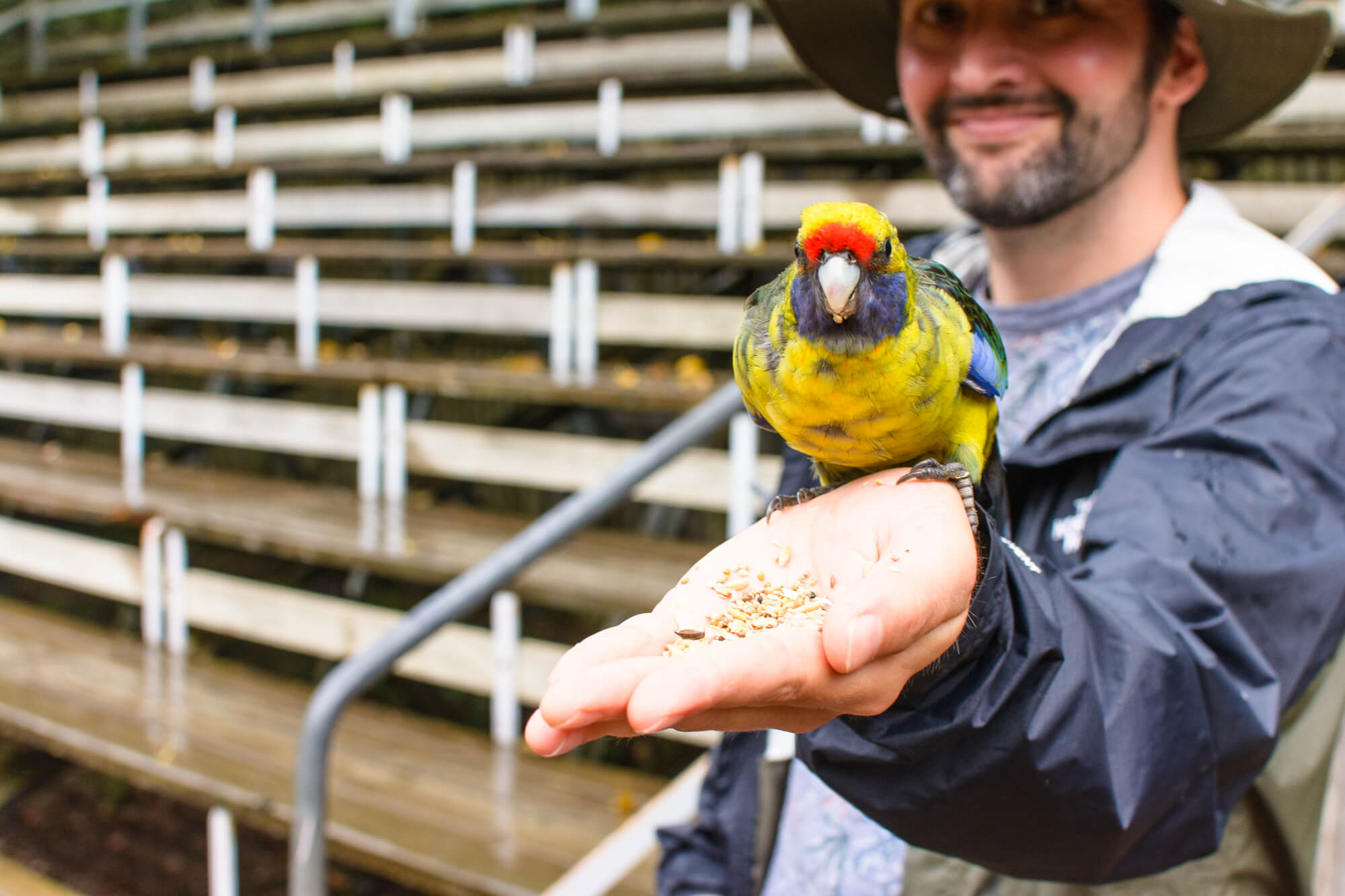
It’s not only about the devils though. We got to see Cape Barren geese and cheeky green rosellas.
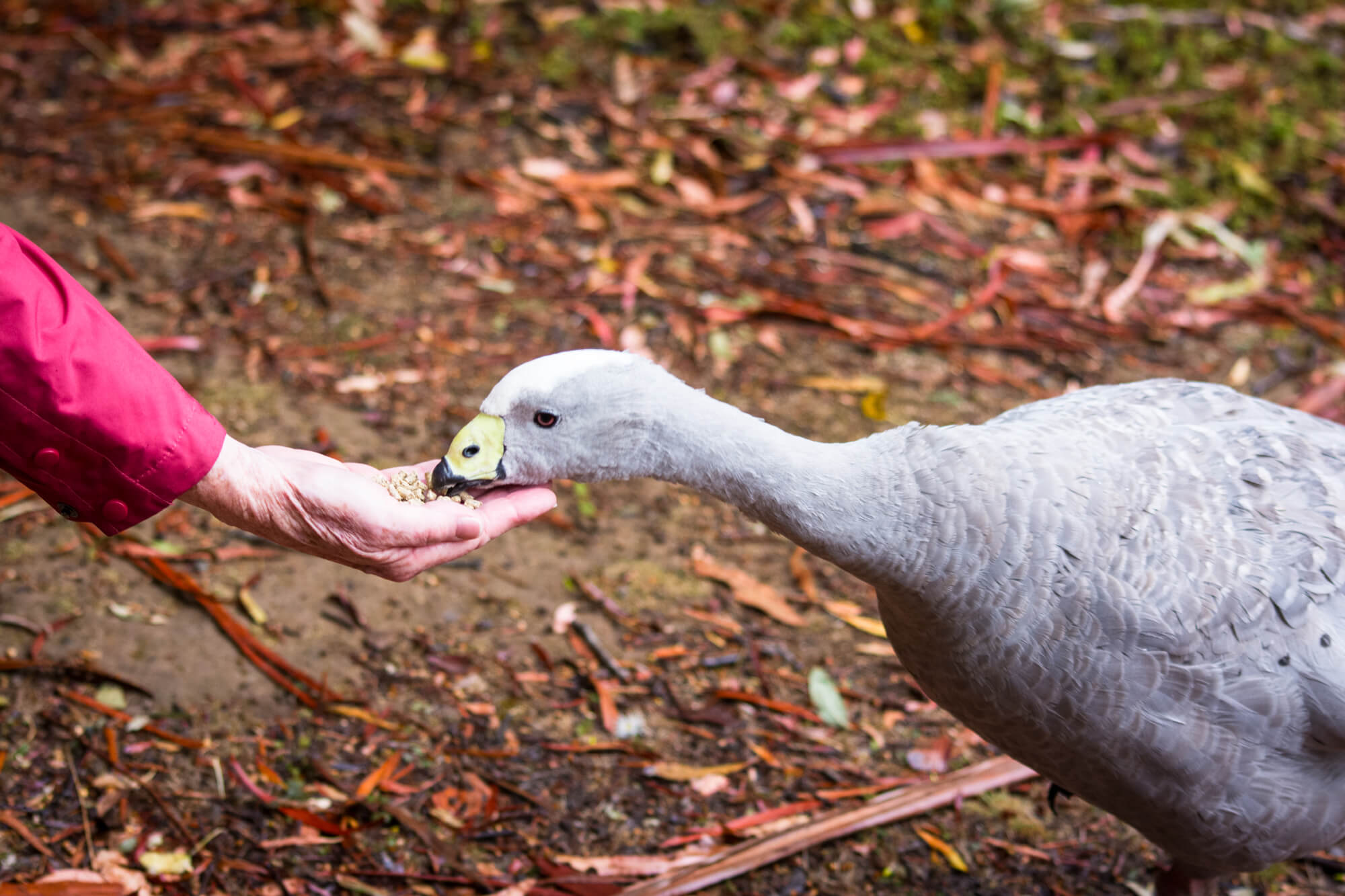
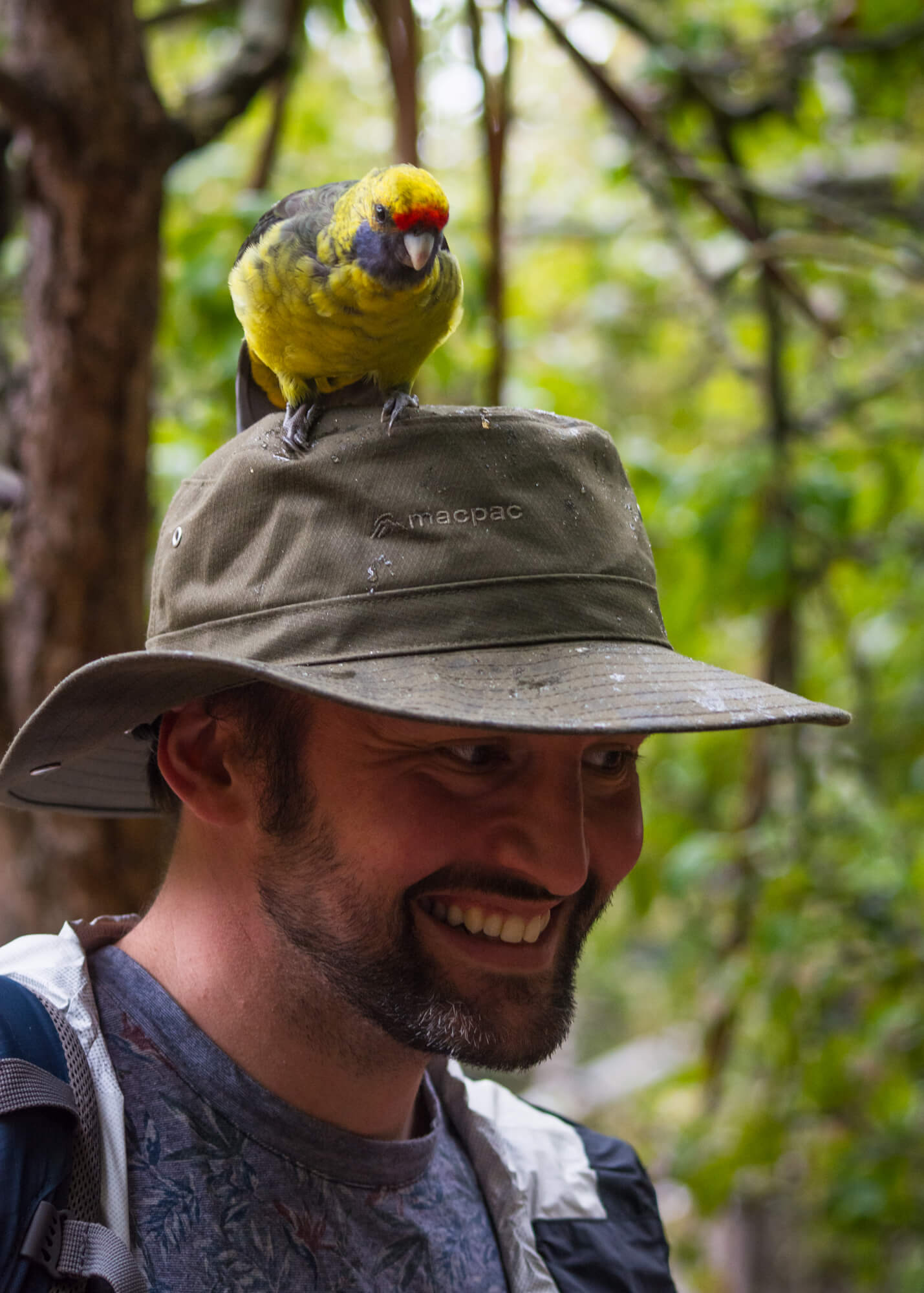
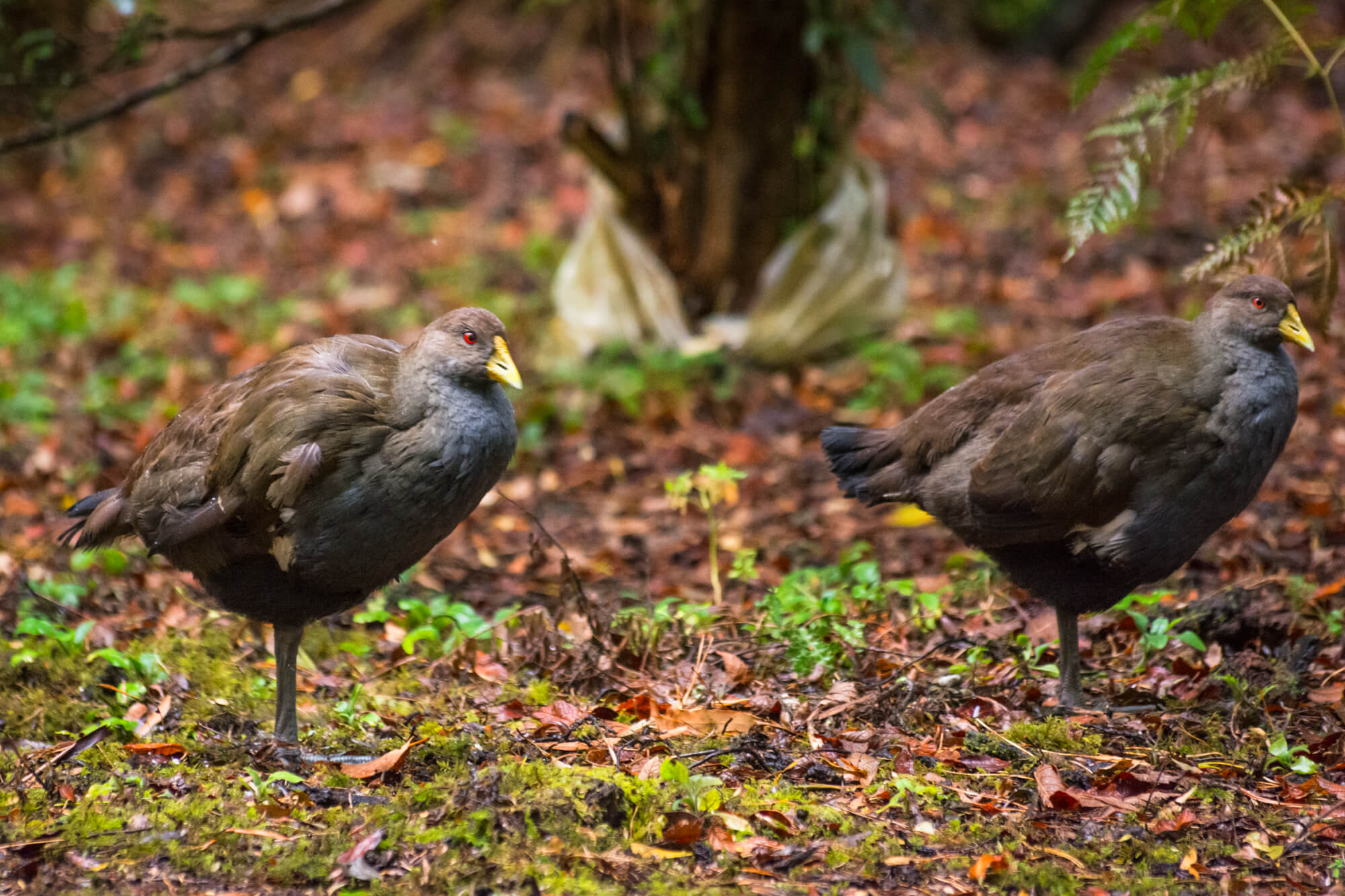
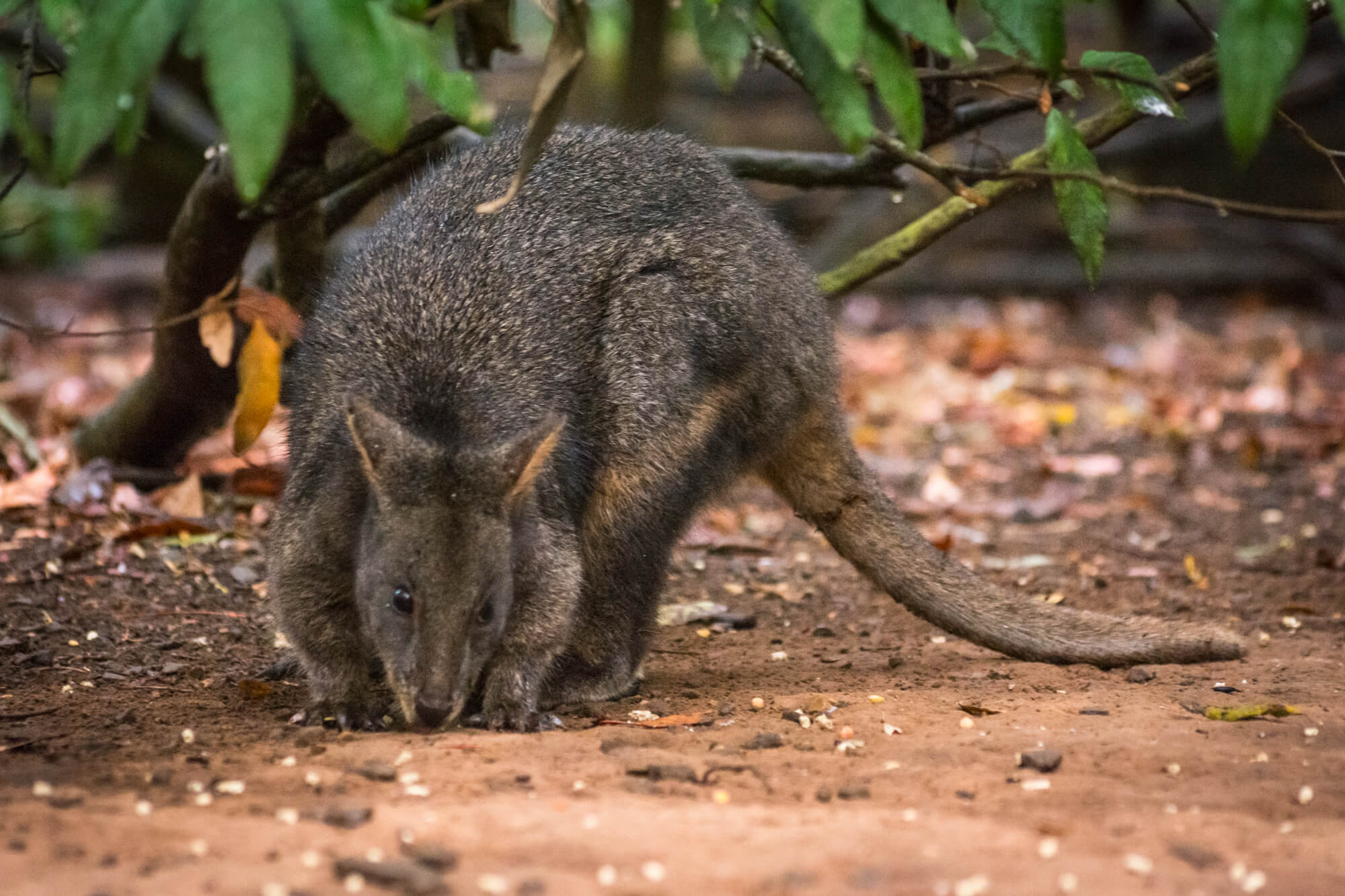
There were also native hens (or “turbo chooks” as our guide called them), and adorable pademelons, which we’d see quite a few of on our travels.
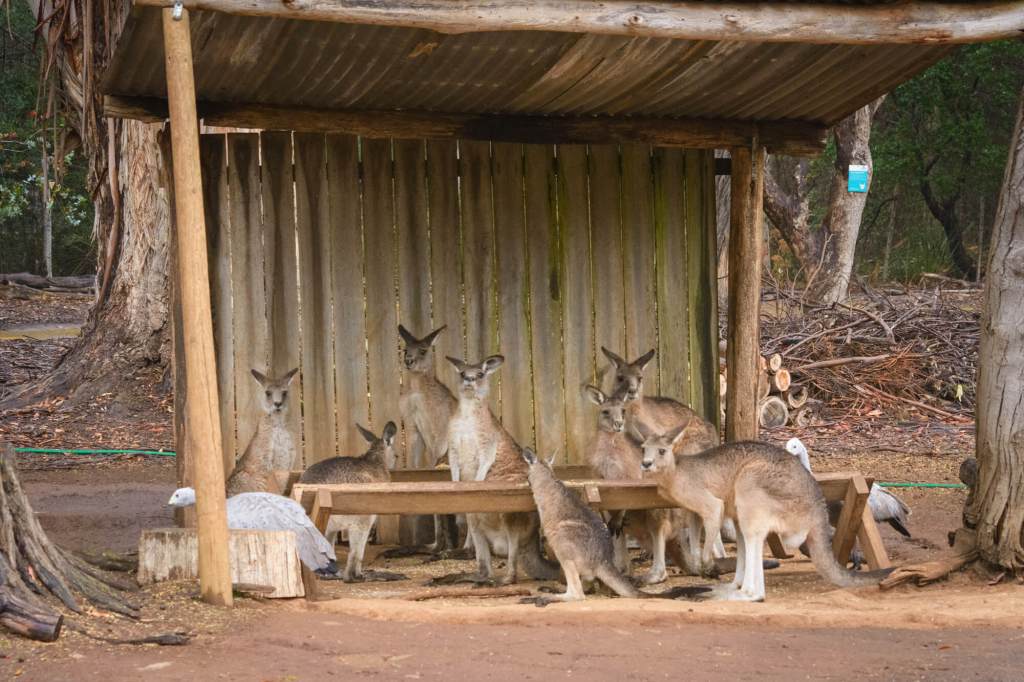
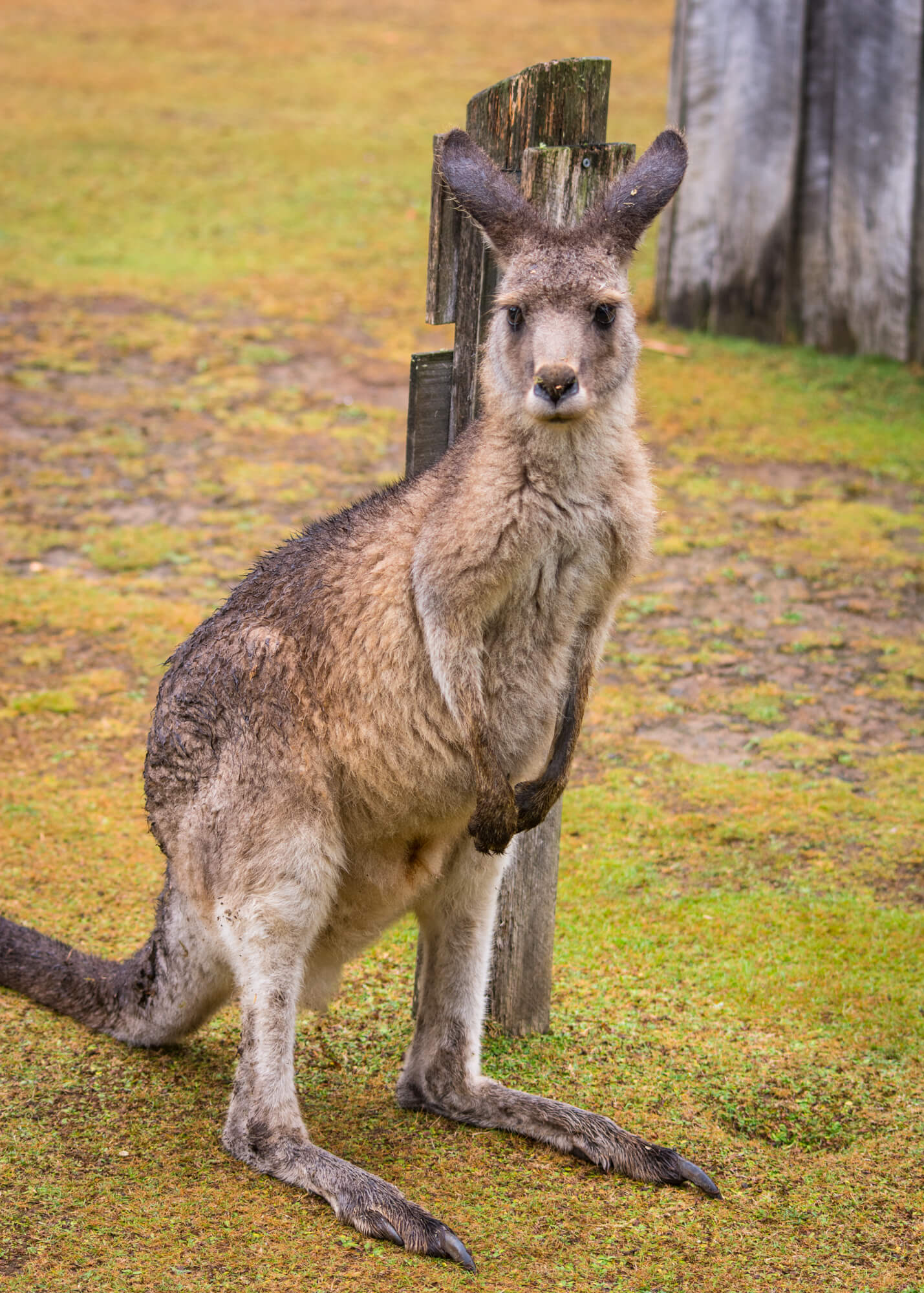
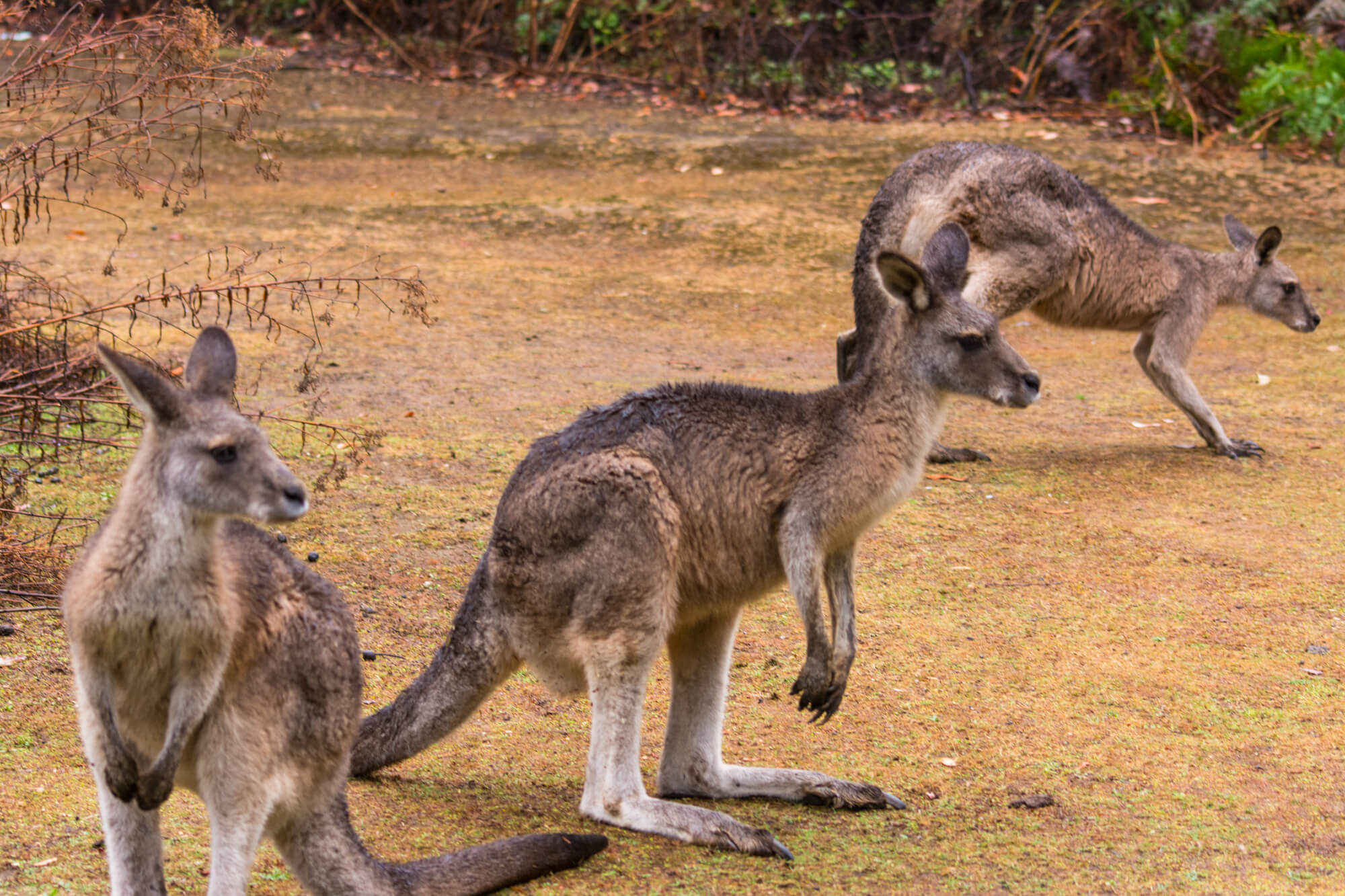
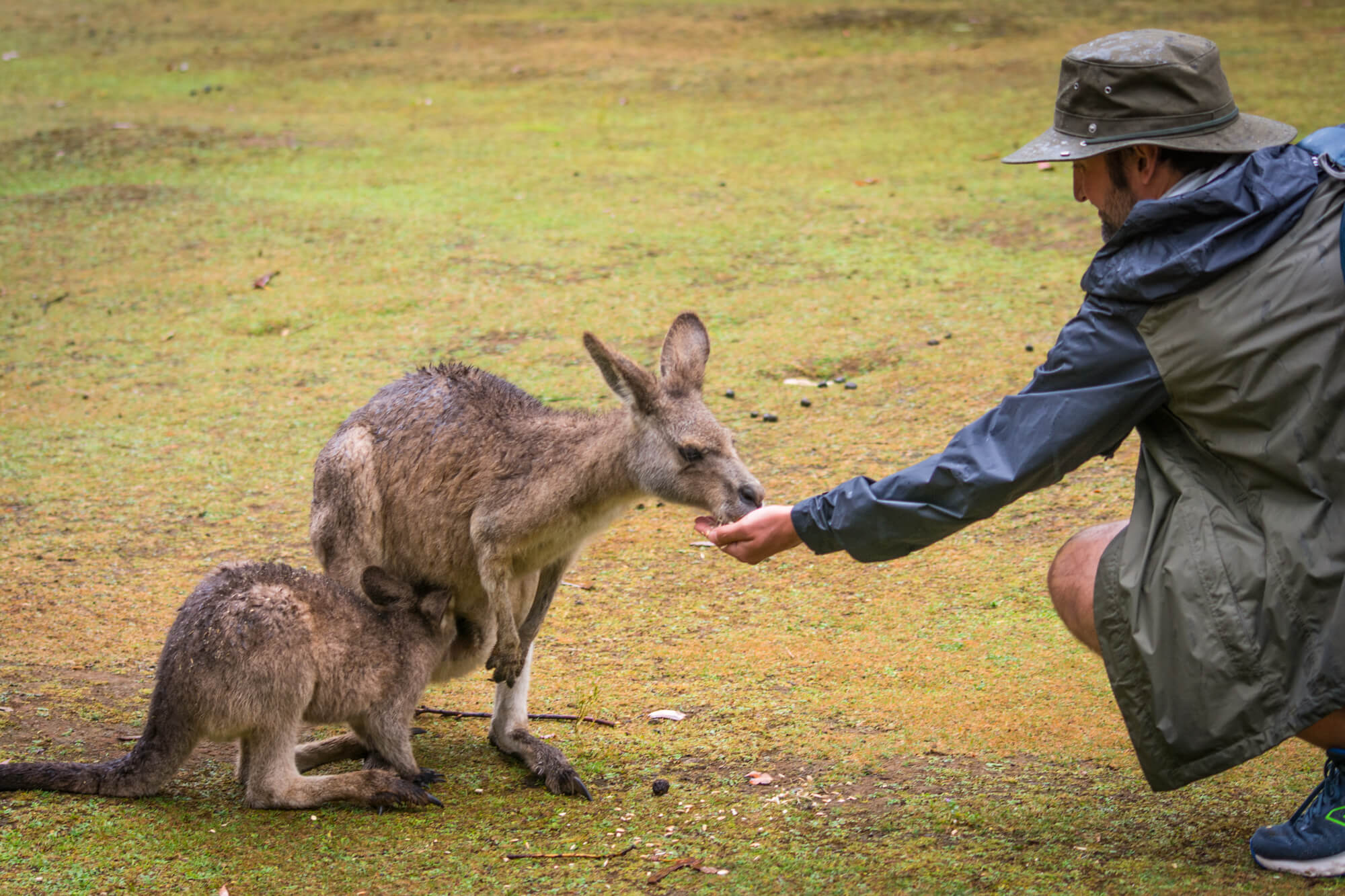
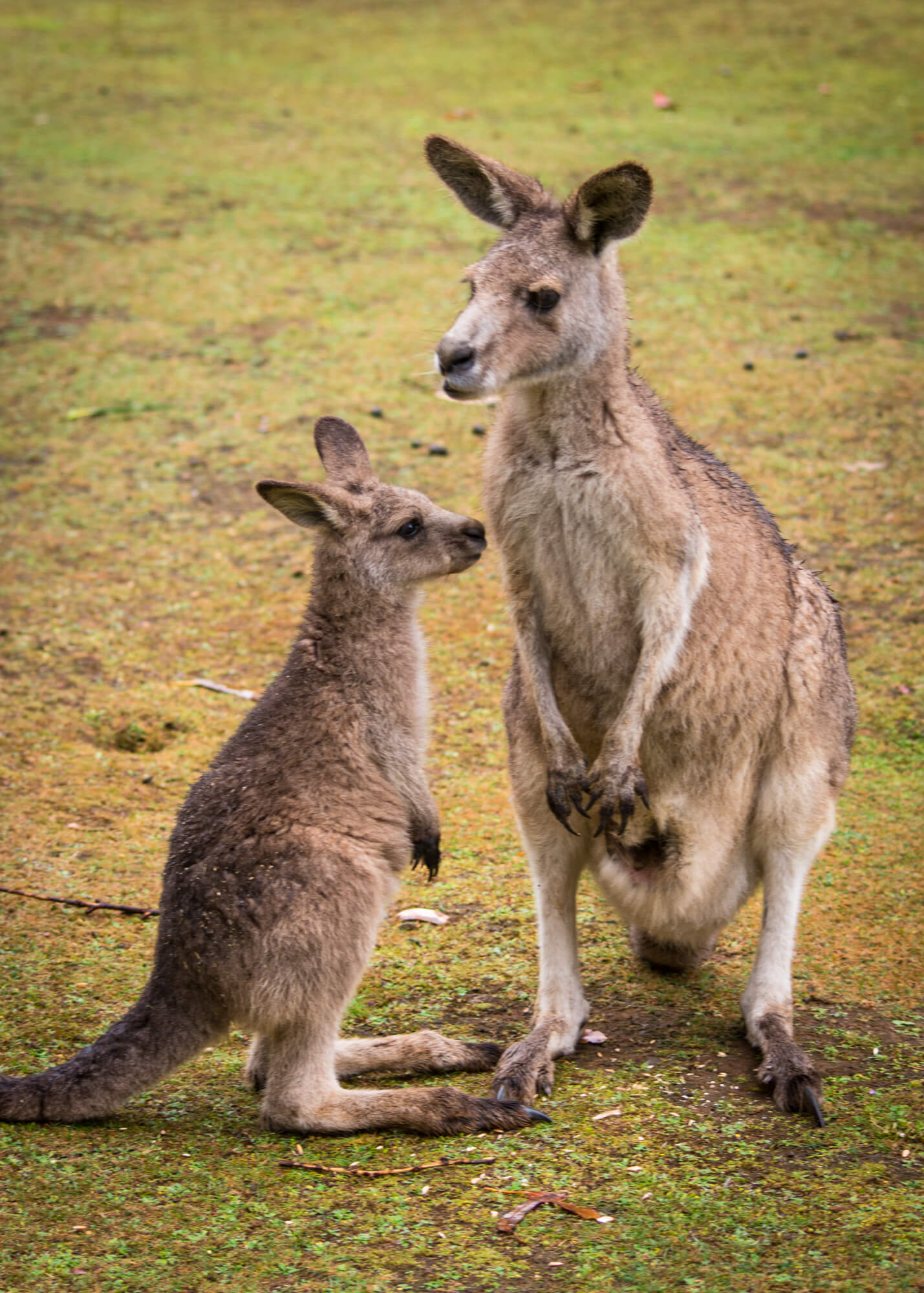
One of the highlights was definitely the forester kangaroos, also known as eastern greys. They were very friendly and definitely used to human-dispensed treats.
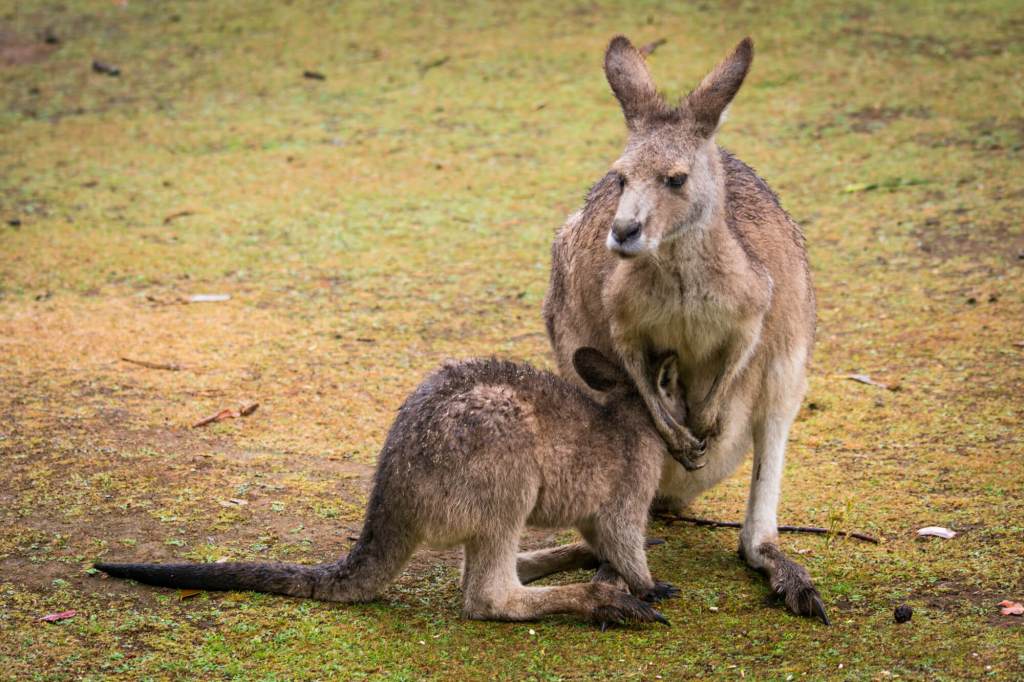
The cutest by far was a mother and joey.
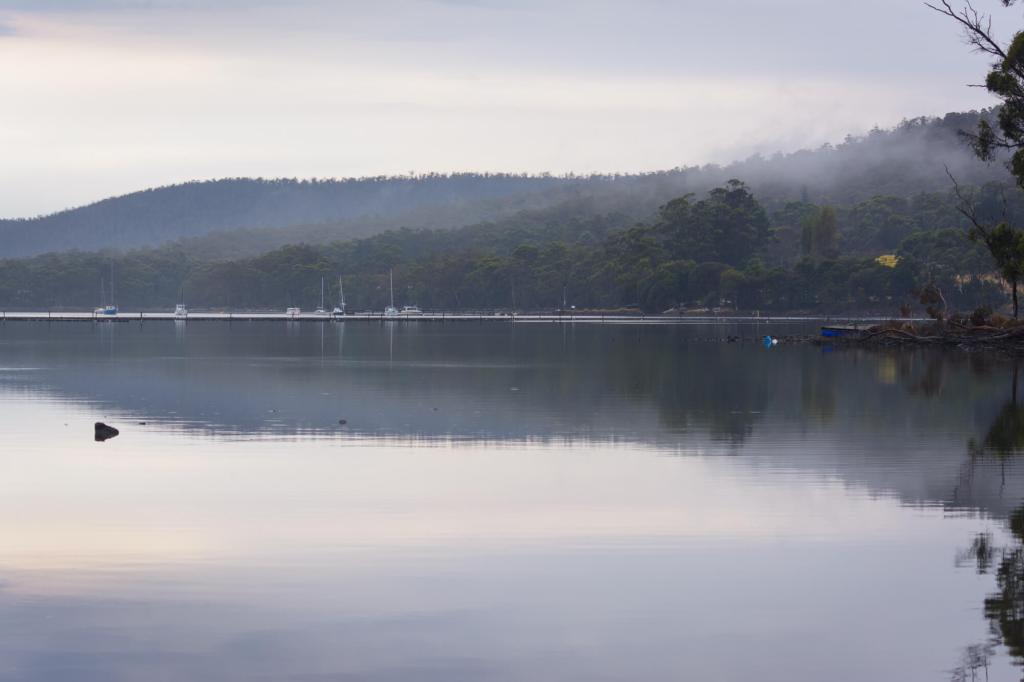
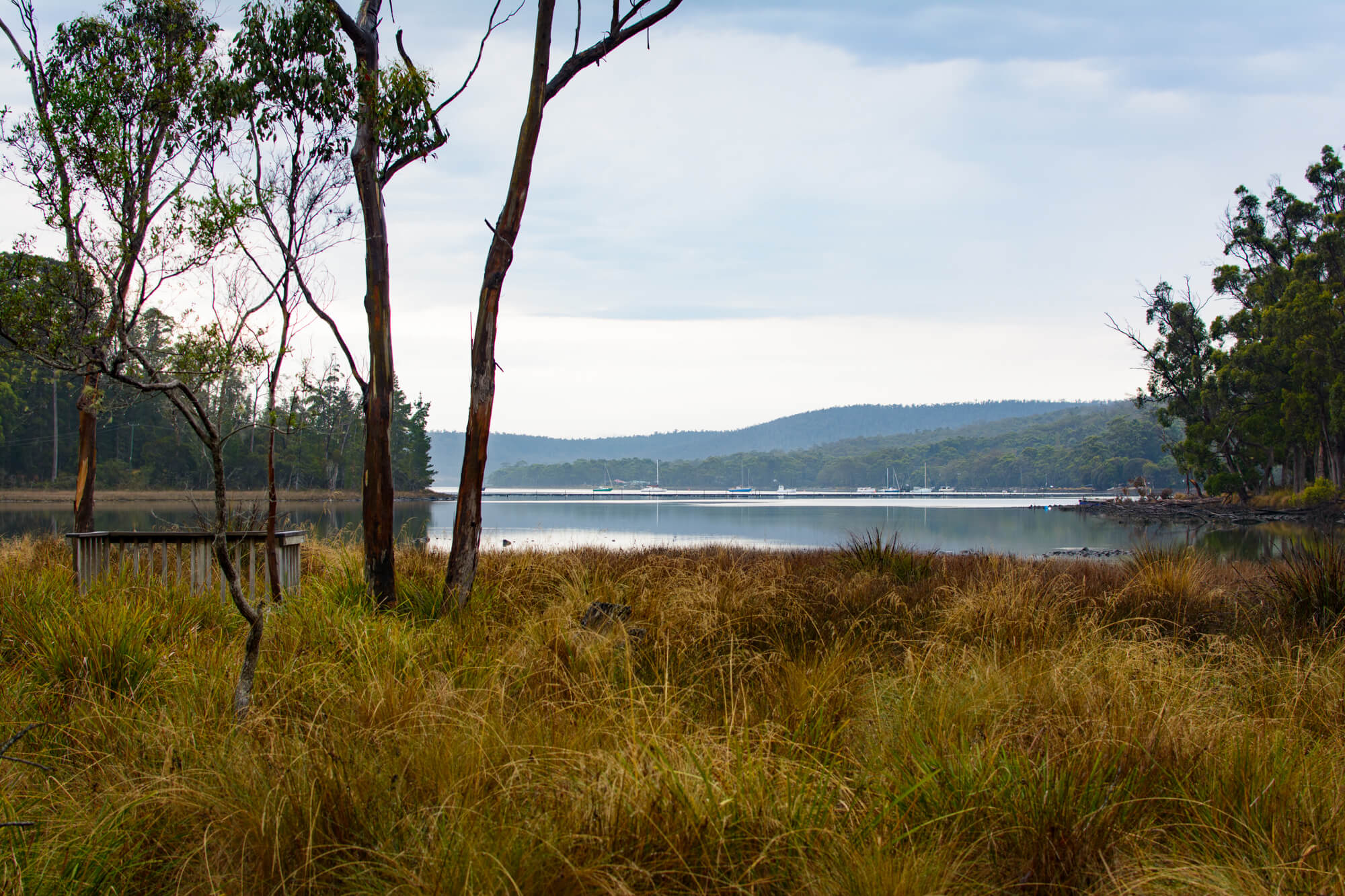
Although we came for the animals, the natural beauty didn’t disappoint either.
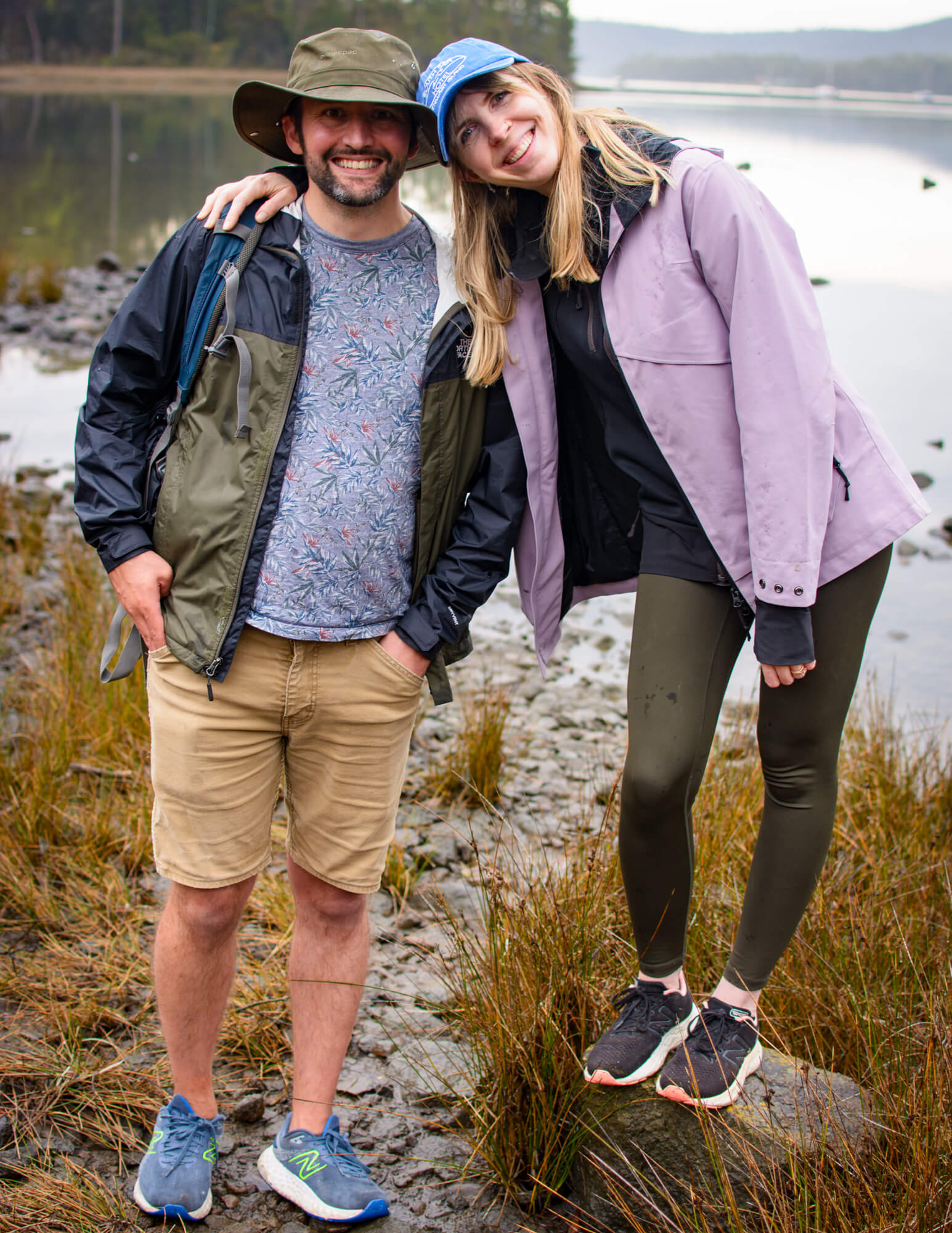
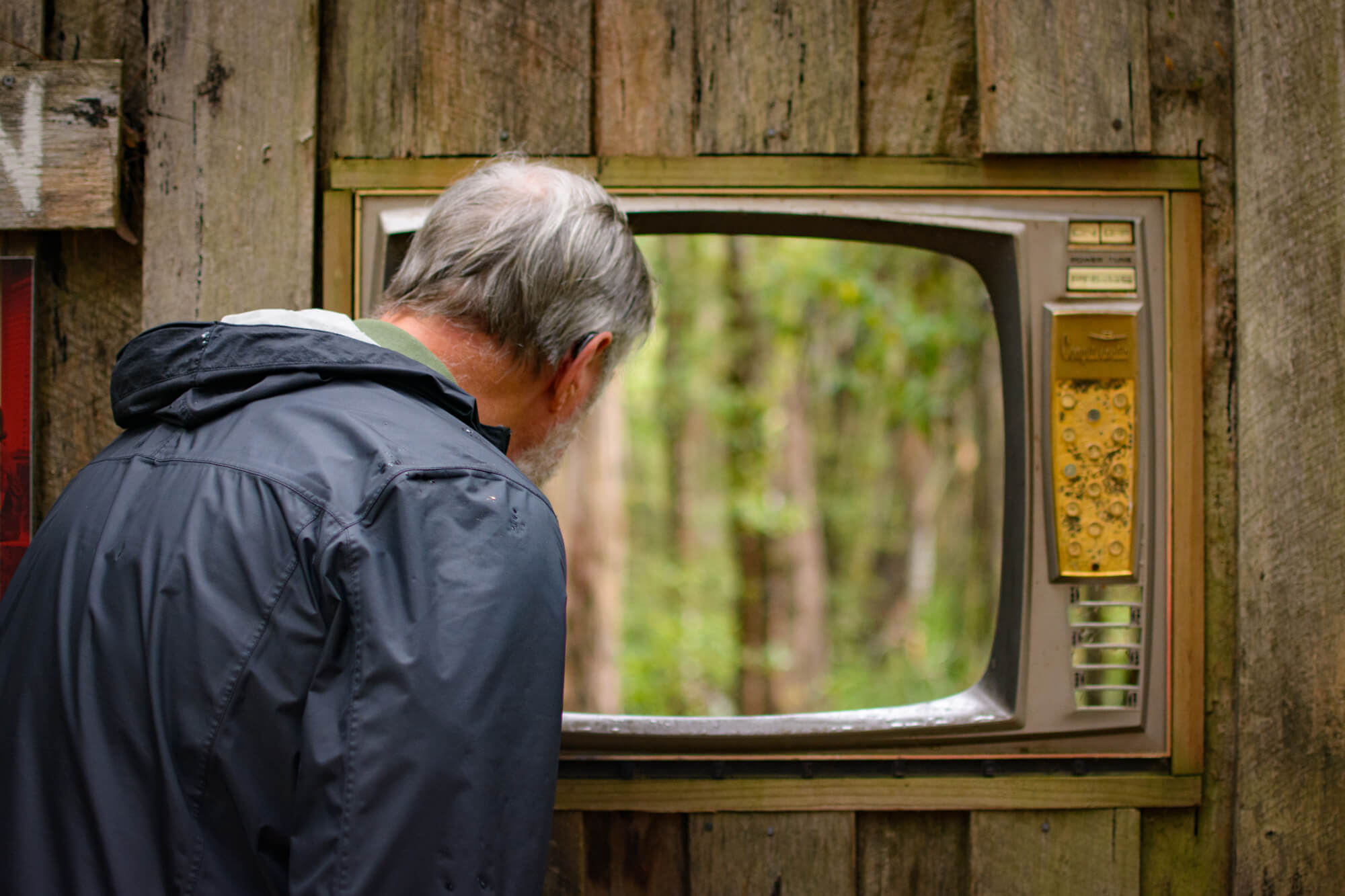
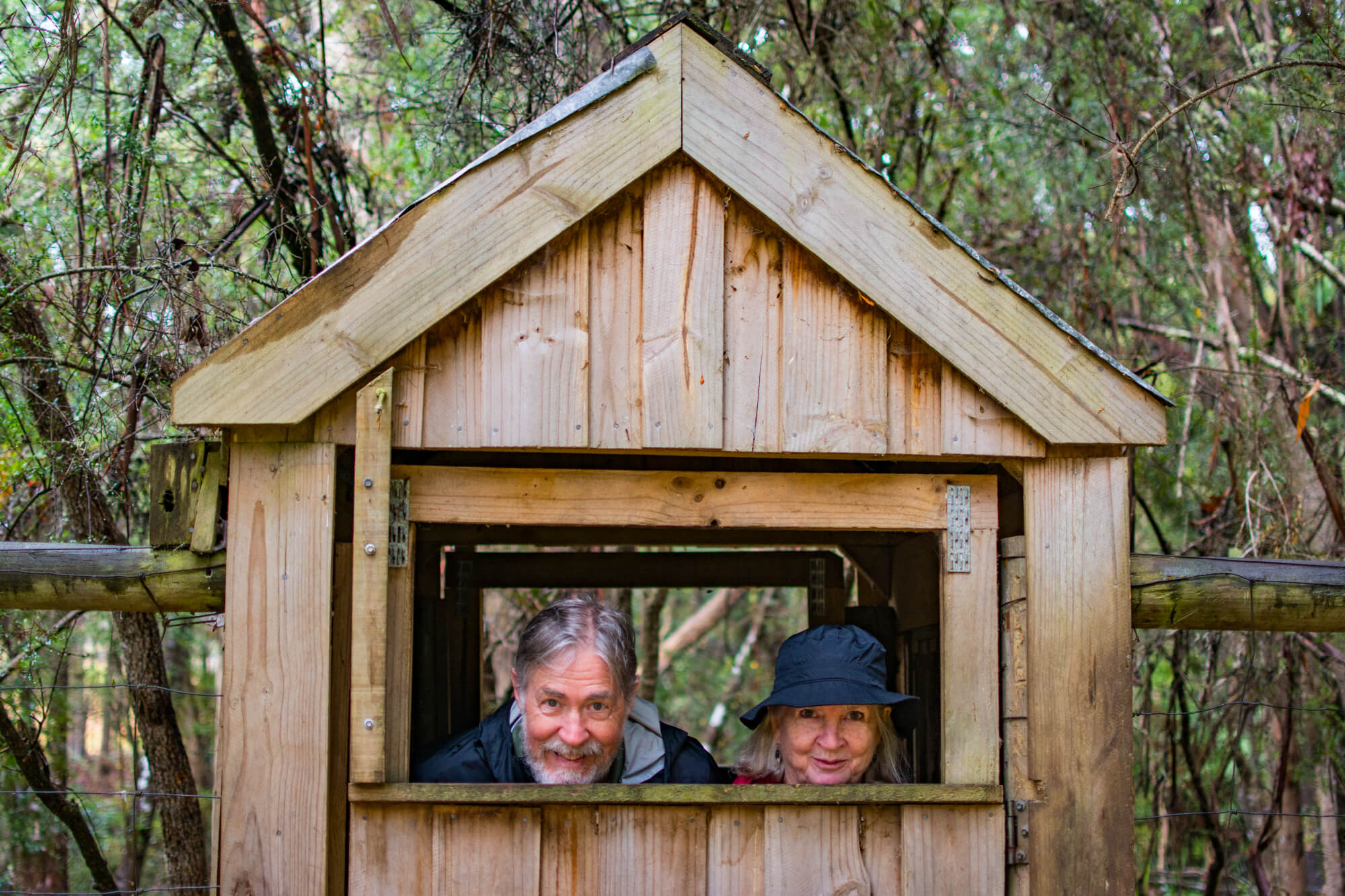
Of course, there were plenty of opportunities to goof around.
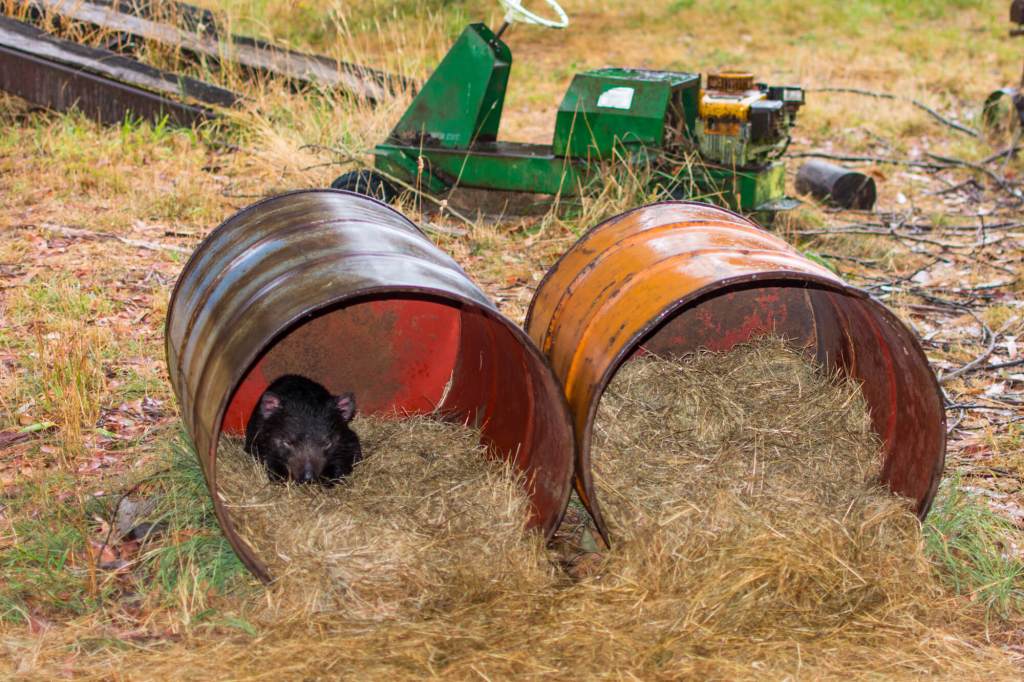
On our way out, as the weather turned against us, we saw a couple more devils in another habitat. Who wouldn’t want to escape the rain and have a nice snooze in a barrel?
And my mom and Andy couldn’t pass up making friends with a couple more rosellas.
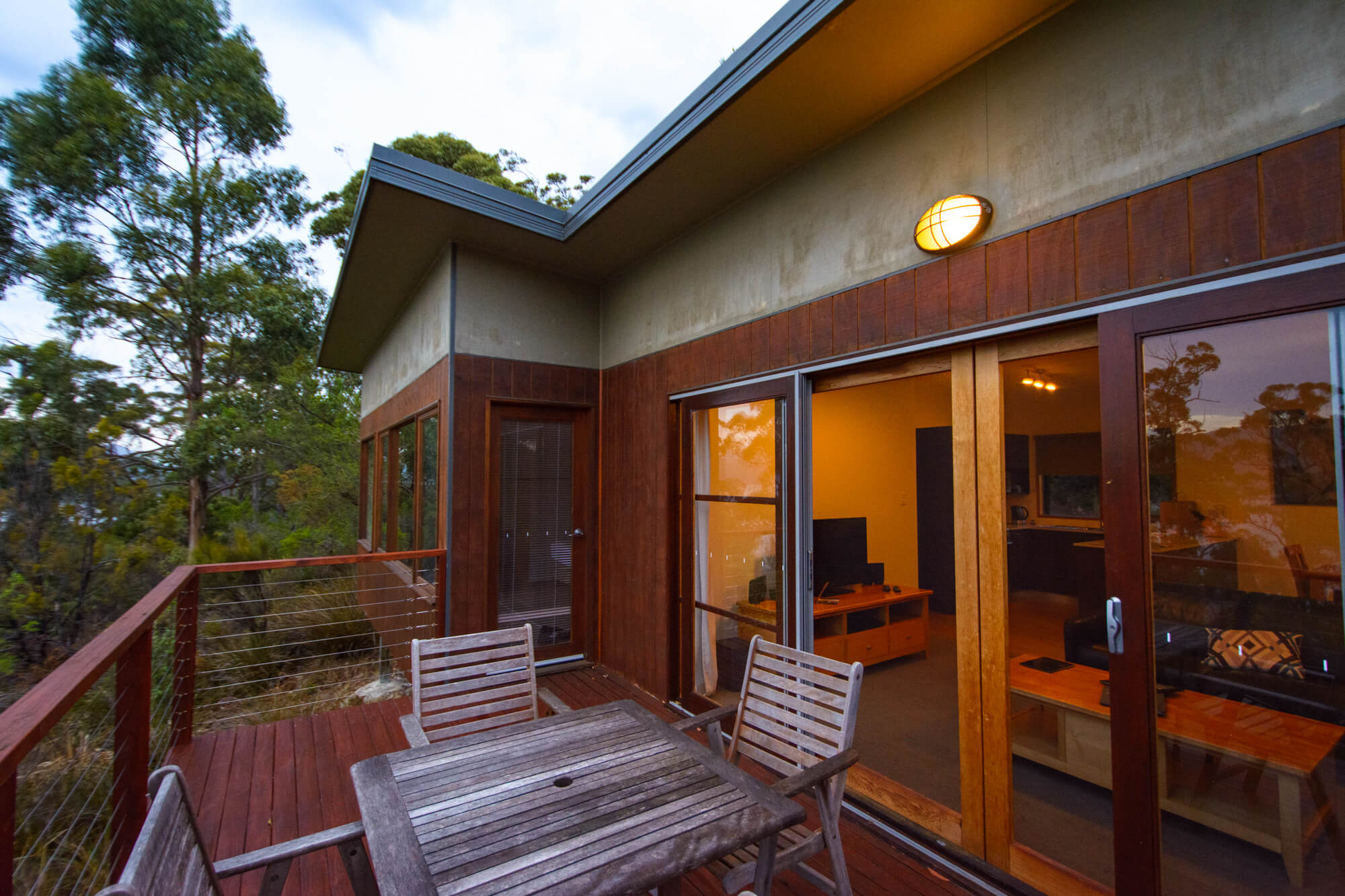
Back on the road, we continued on to Port Arthur, where we checked into our beautiful cabin for the night before making our way to the historic site.
According to trusty Wikipedia, “the site forms part of the Australian Convict Sites, a World Heritage property consisting of 11 remnant penal sites originally built within the British Empire during the 18th and 19th centuries on fertile Australian coastal strips. Collectively, these sites, including Port Arthur, are described by UNESCO as “… the best surviving examples of large-scale convict transportation and the colonial expansion of European powers through the presence and labour of convicts.”
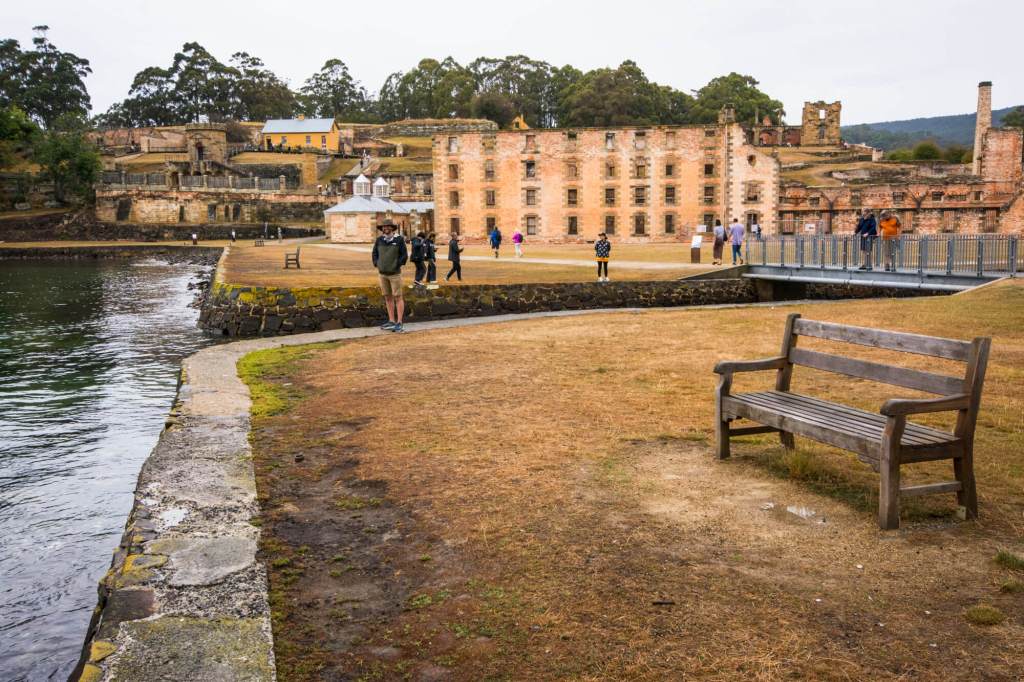
It’s an absolutely beautiful natural location, filled with horribly traumatic history. In addition to the many convicts who suffered here, it’s also the location of Australia’s largest mass shooting, which took place in 1996 at the site’s former cafe and gift shop (now a memorial). This place has surely seen enough pain in its history, and the stories of the many who lived and died here are contained in multiple buildings and museums on site. In addition, as a result of the 90’s massacre, Australia passed strict gun control laws which have prevented further tragedies of this kind.
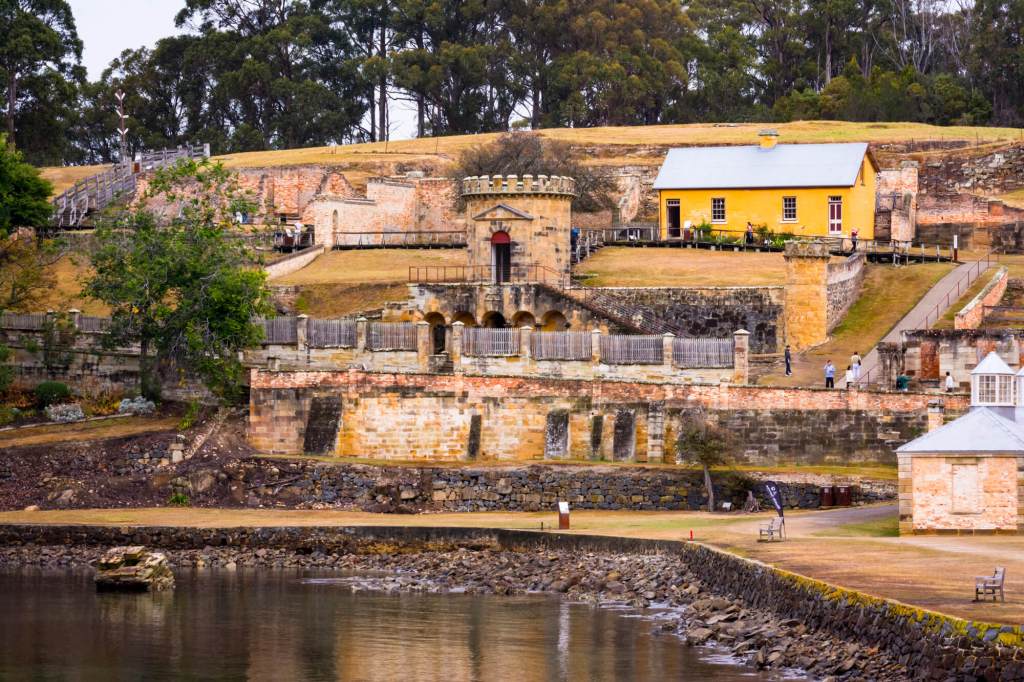
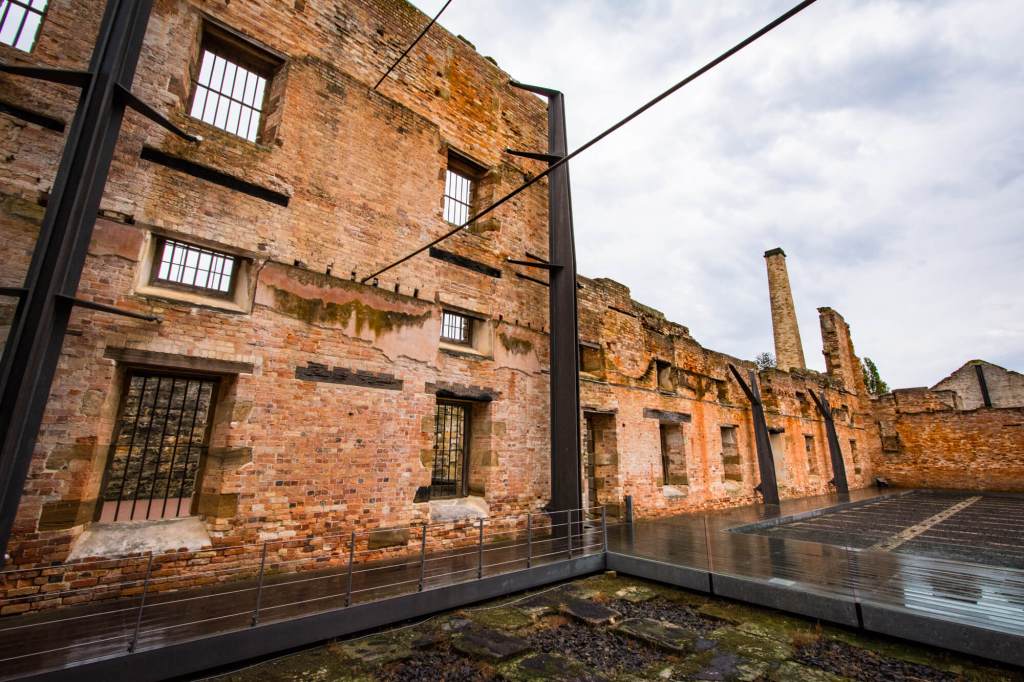
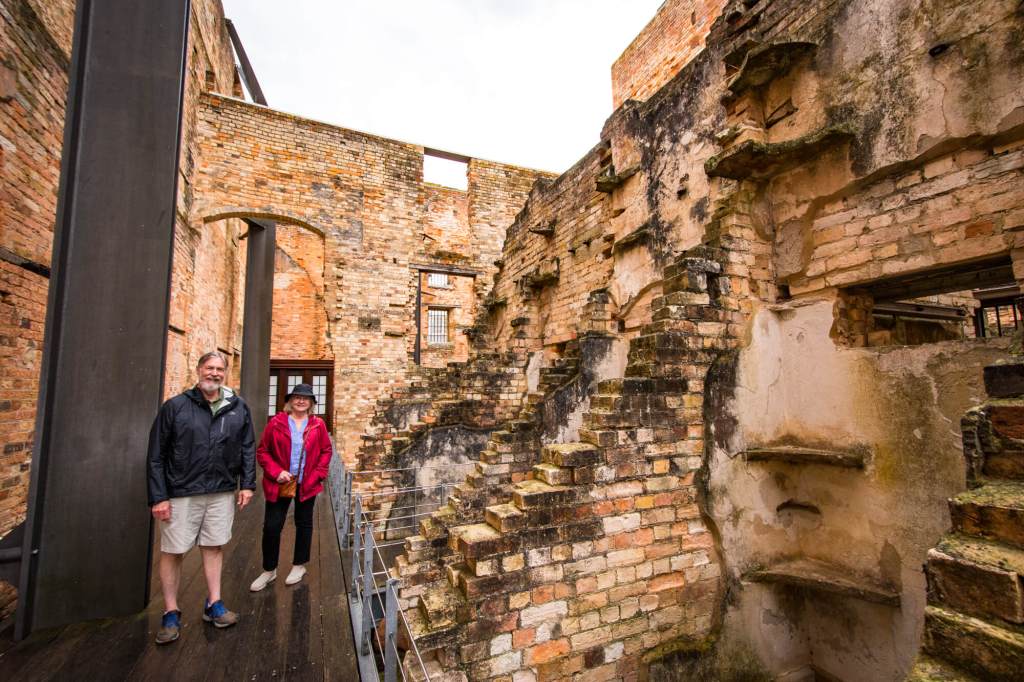
It was pretty wet, but we didn’t let that stop us from fully exploring the site. Although we didn’t take a tour, we learned a great deal from plaques and talks.
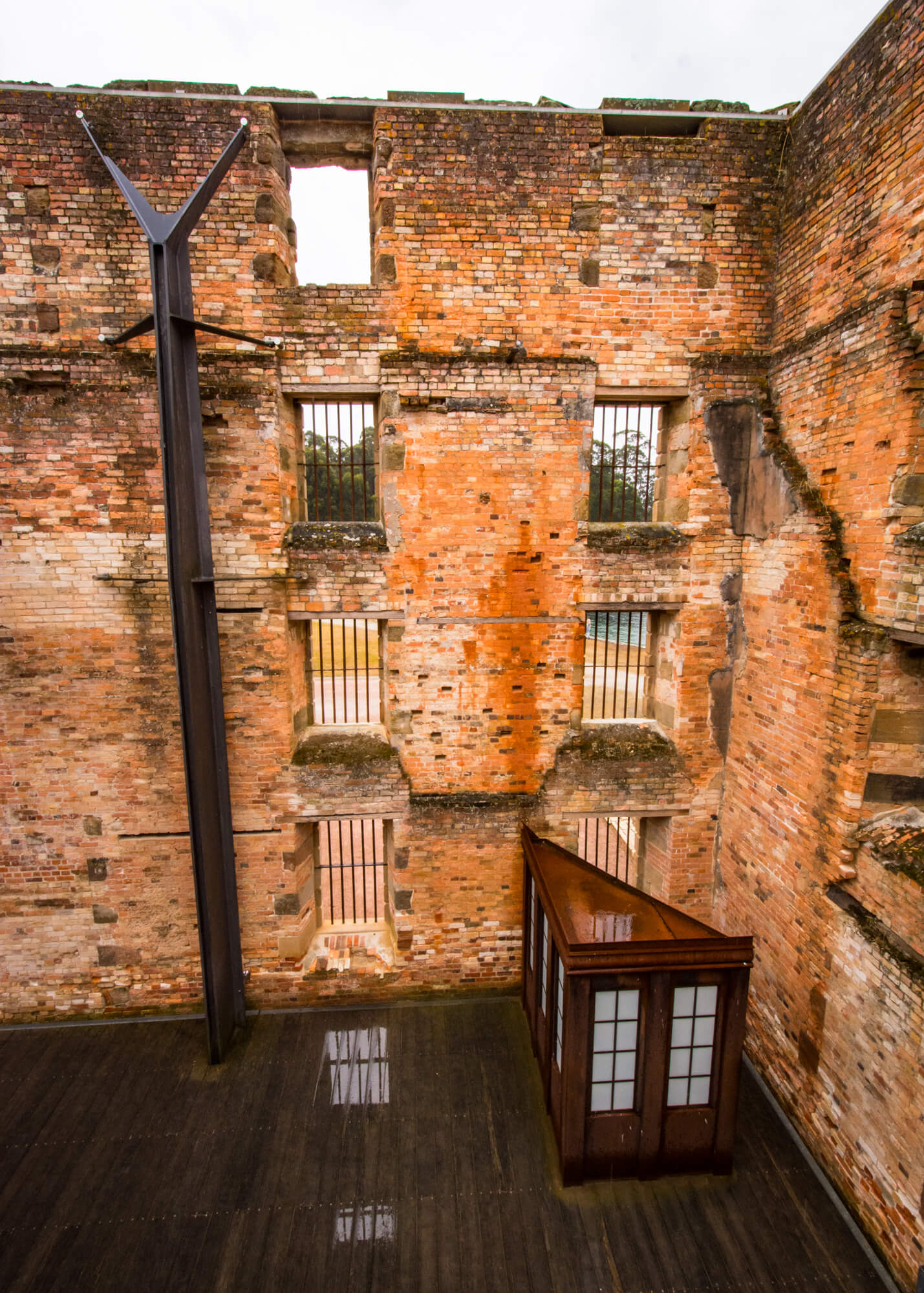
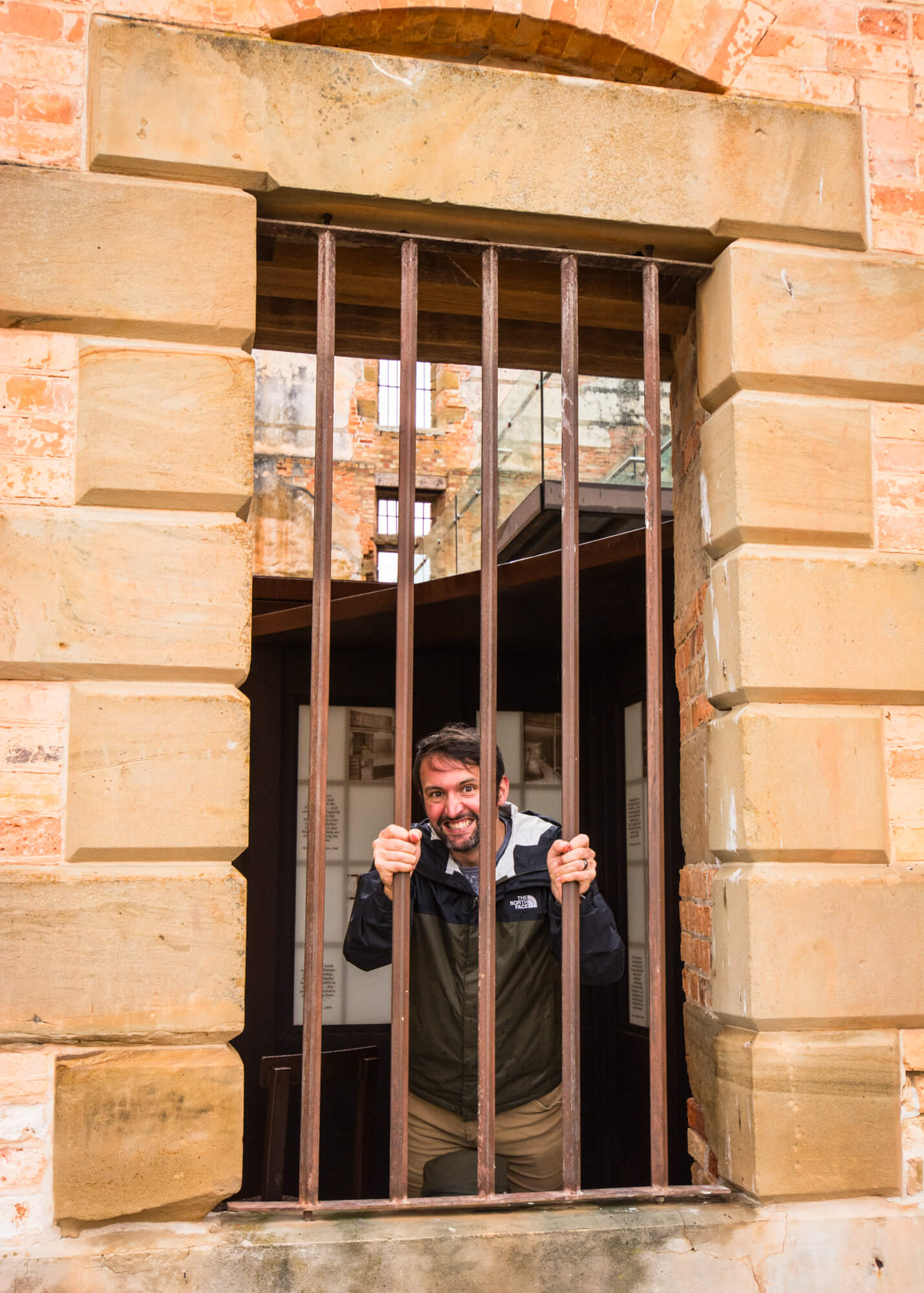
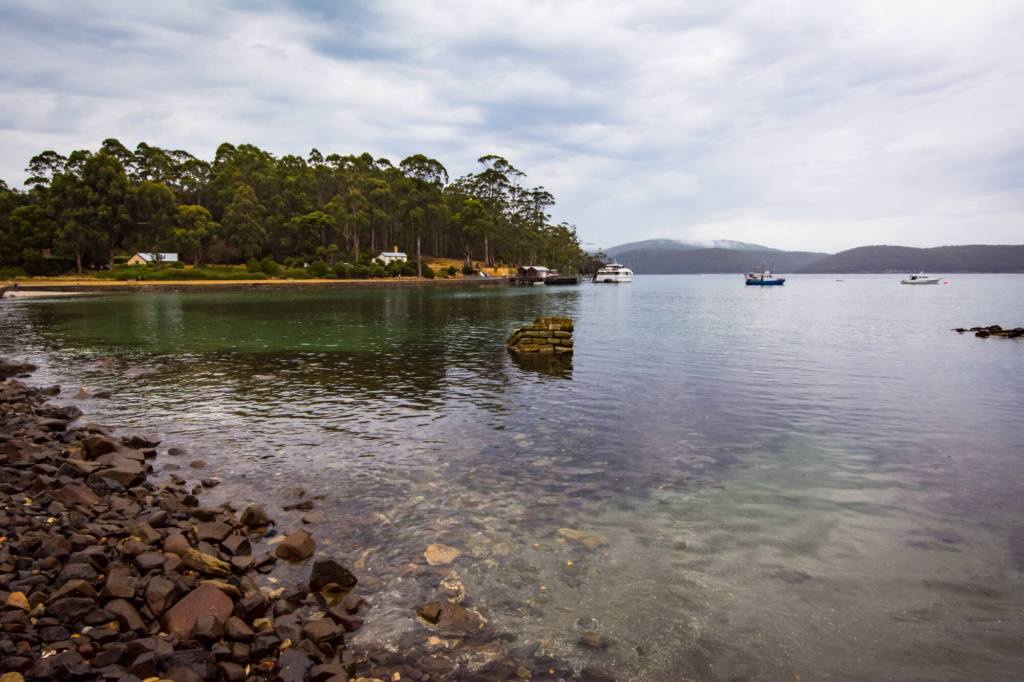
I won’t go into details on the history, as it’s so vast and complex, but I highly recommend looking it up.
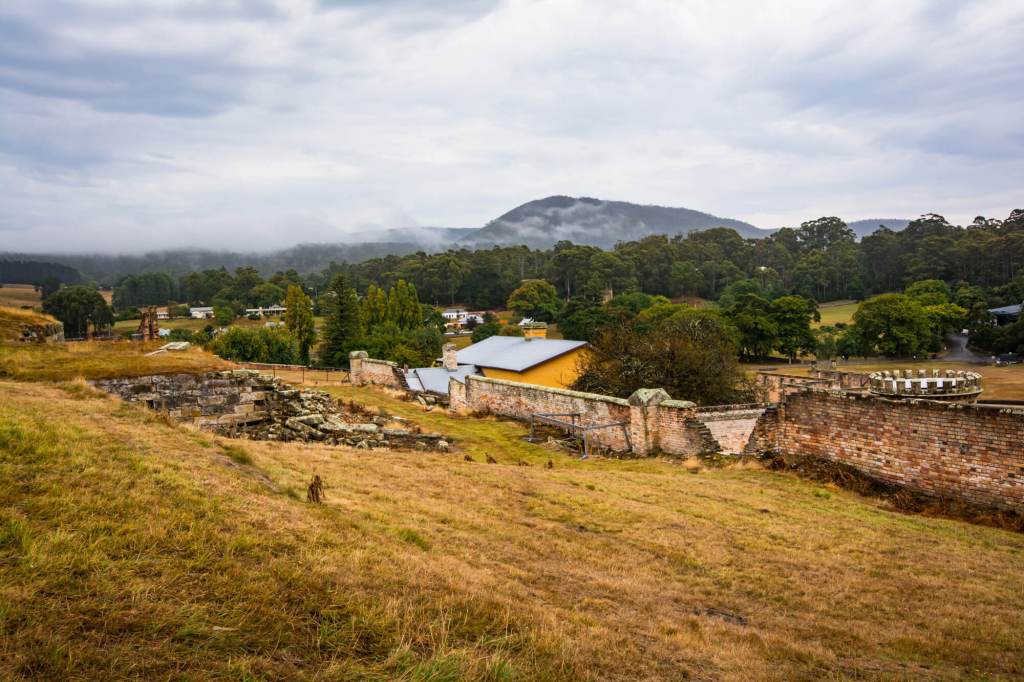
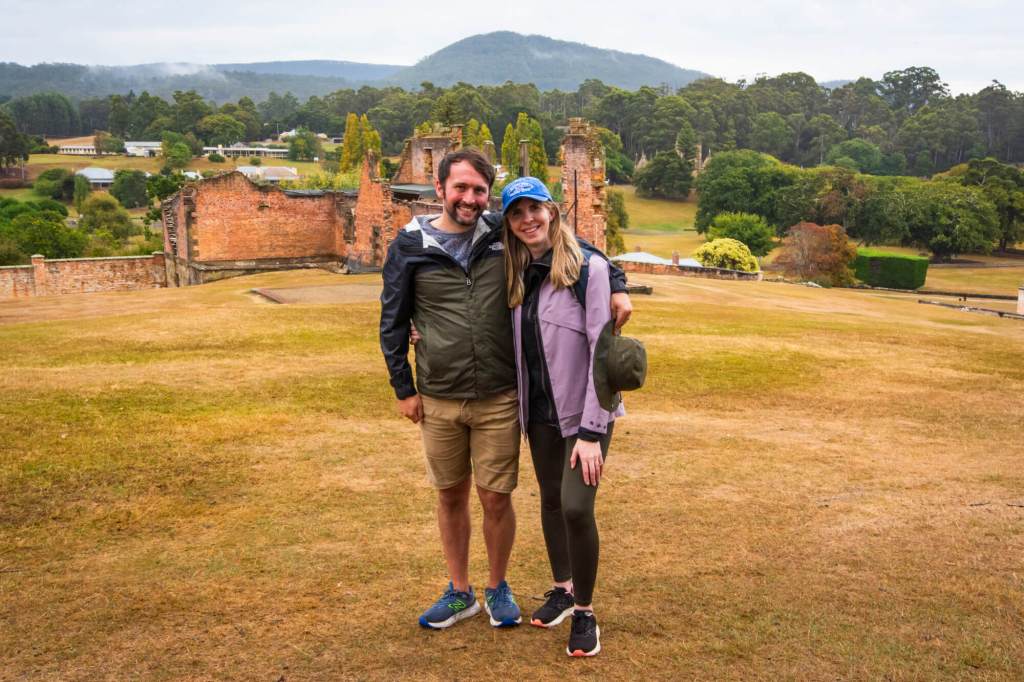
The pastoral views really seemed at odds with the history of the place. It now feels peaceful, which I hope means that we have learned something from the suffering of the past, while the names of those who were locked up here live on.
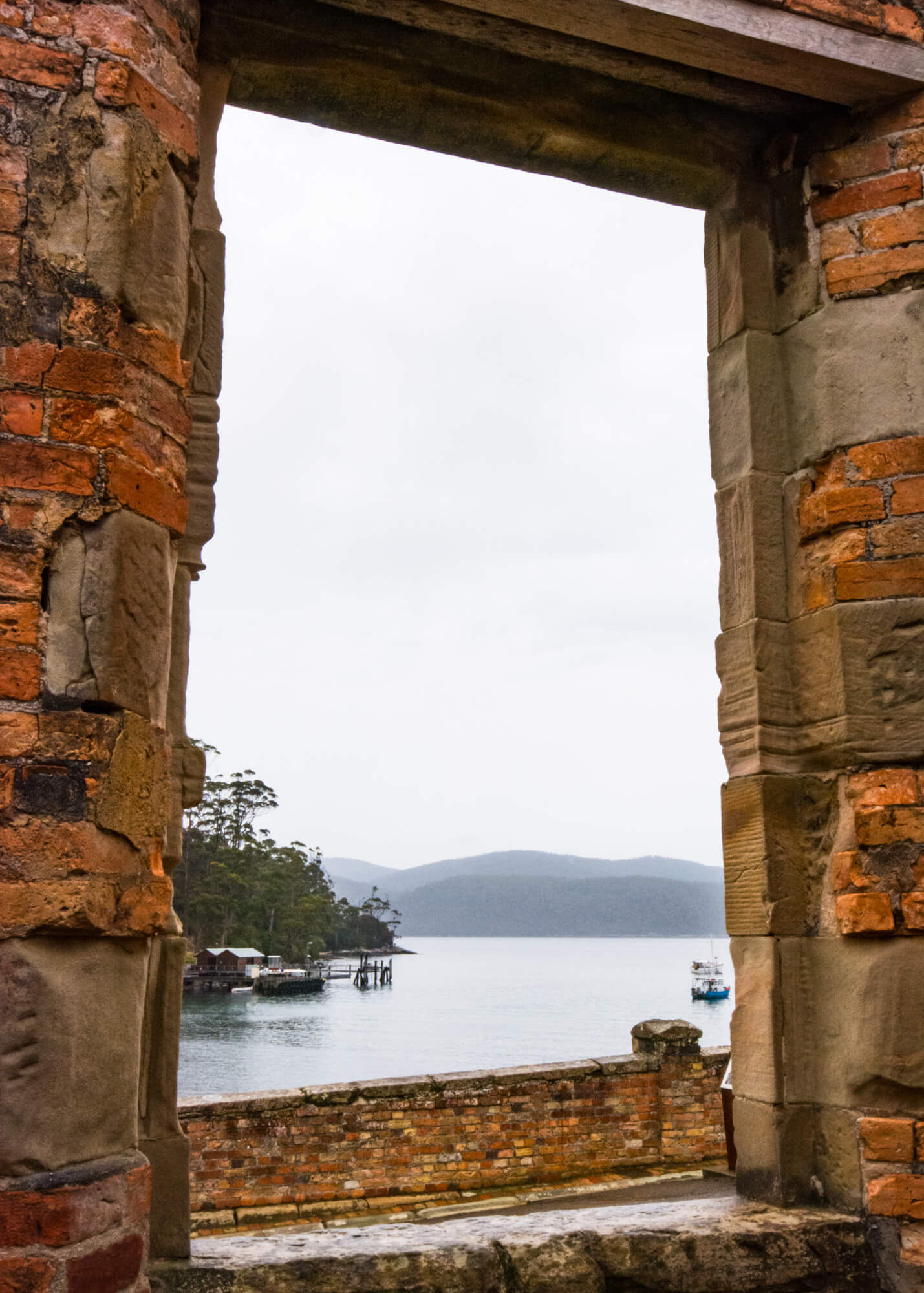
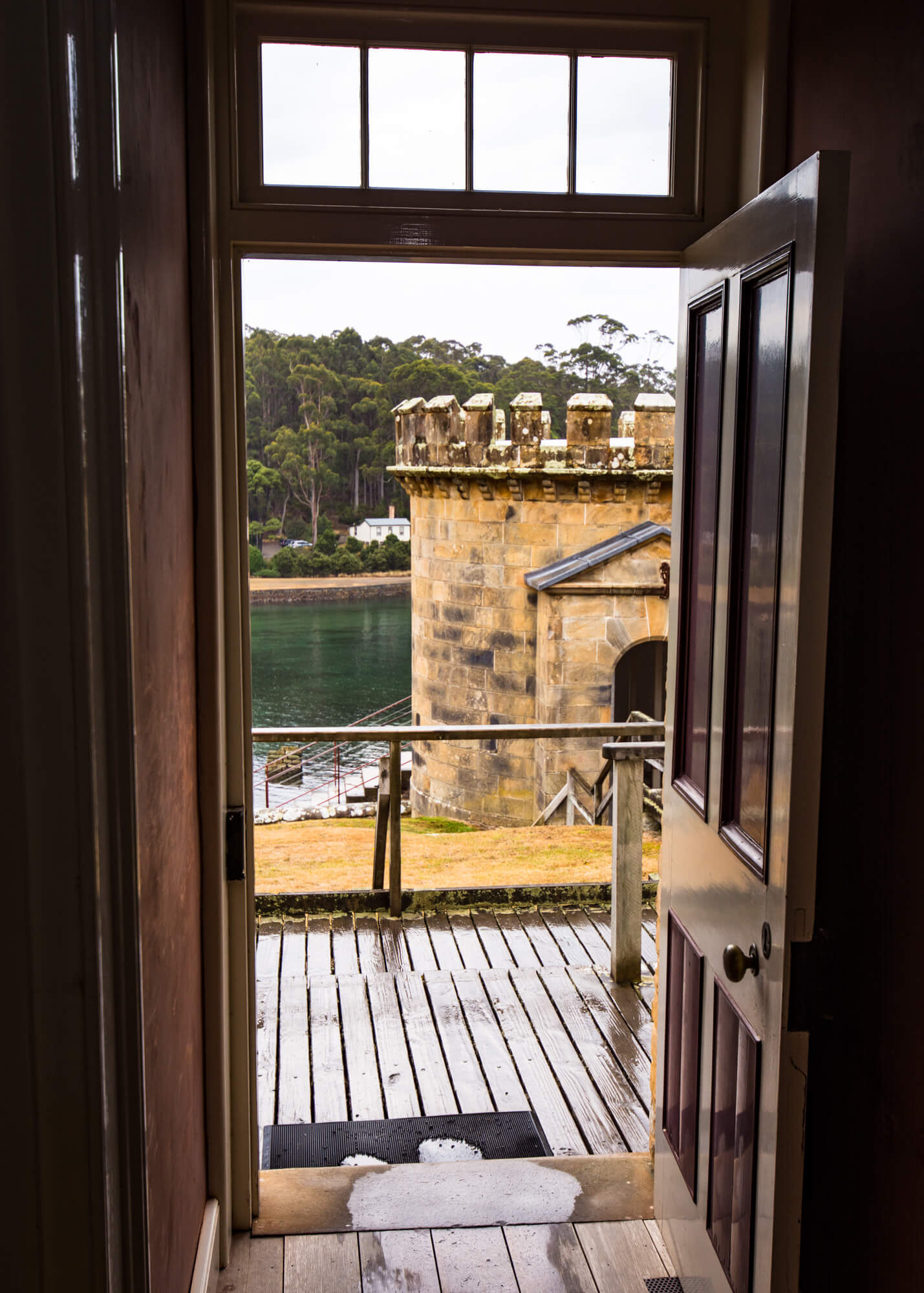
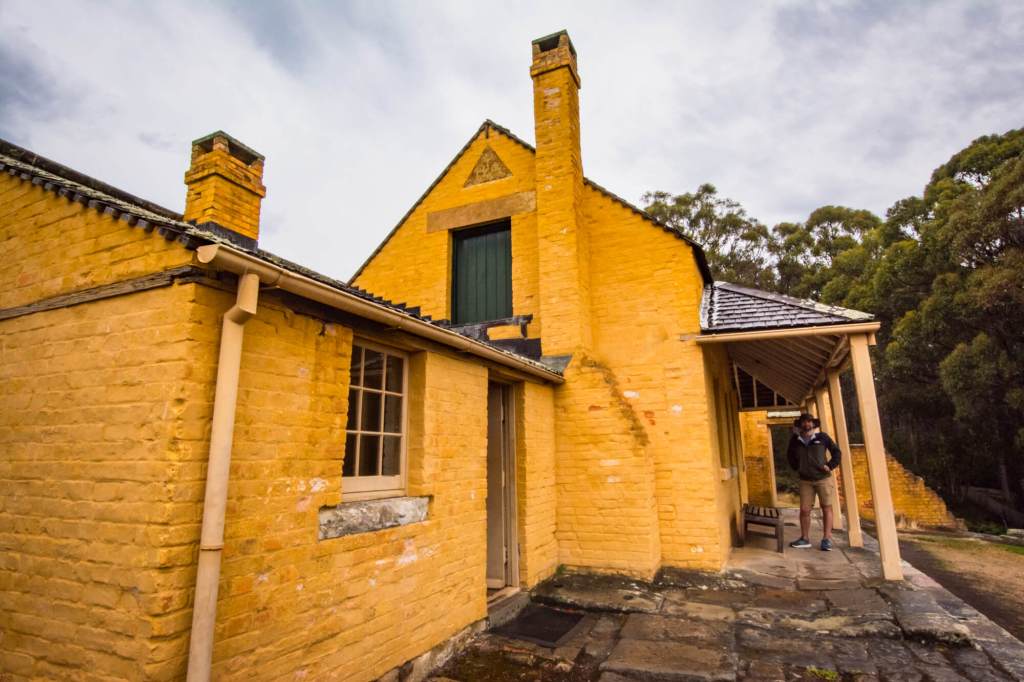
The lives of the prison commandants were a world away from the prisoners they oversaw, and we got to see the view from the other side too.
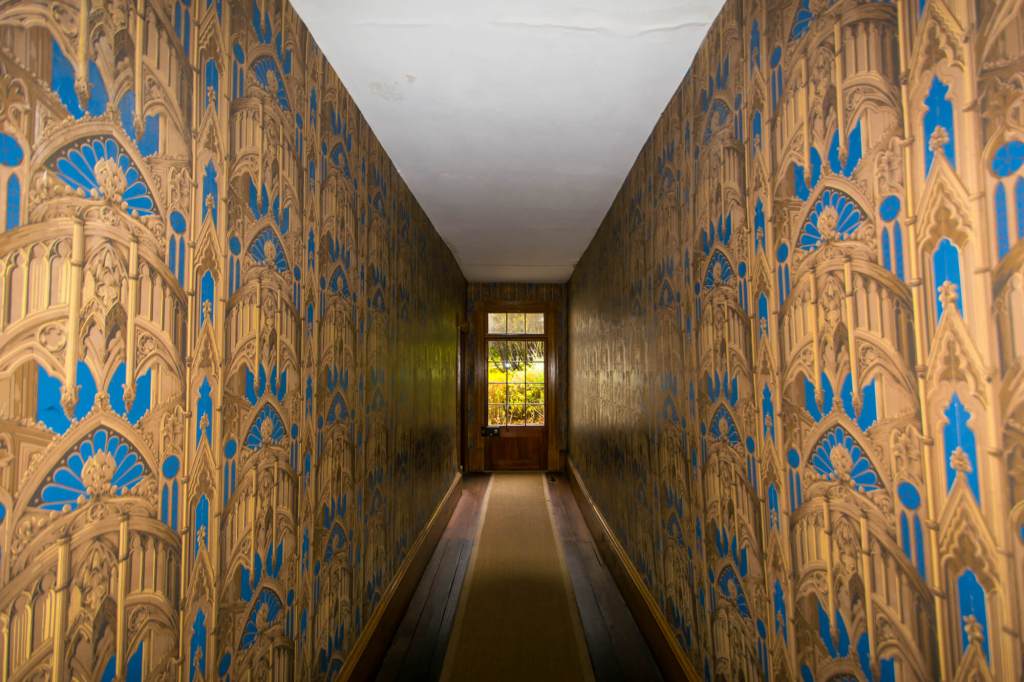
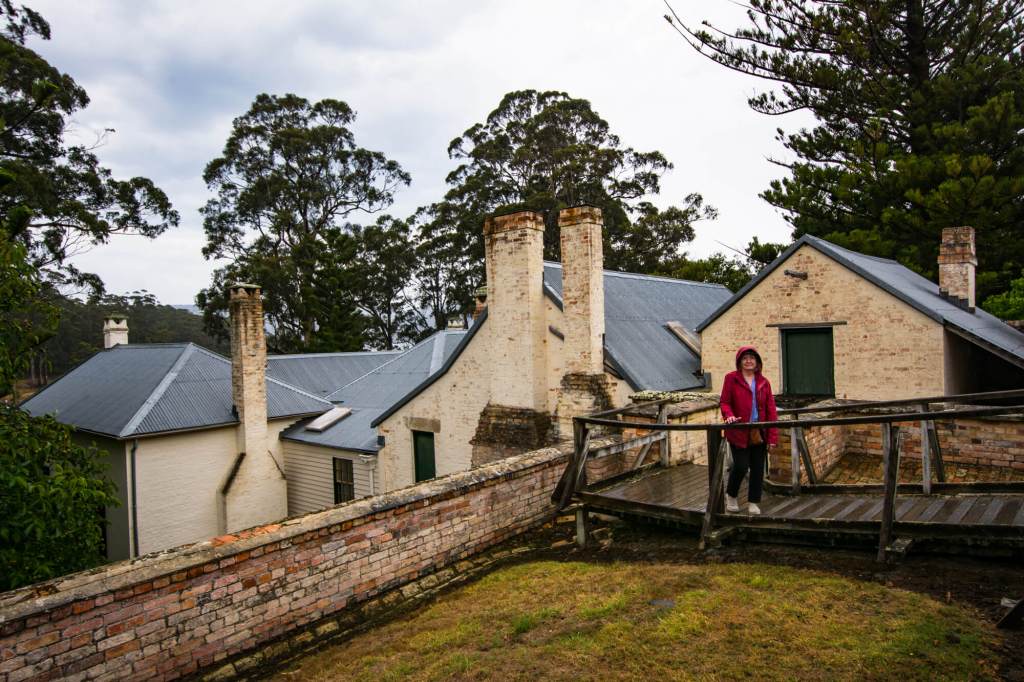
The amount of structures on site was incredible. You could easily spend days here, seeing everything. It used to be a fully functioning village, if one founded on macabre principles, after all.
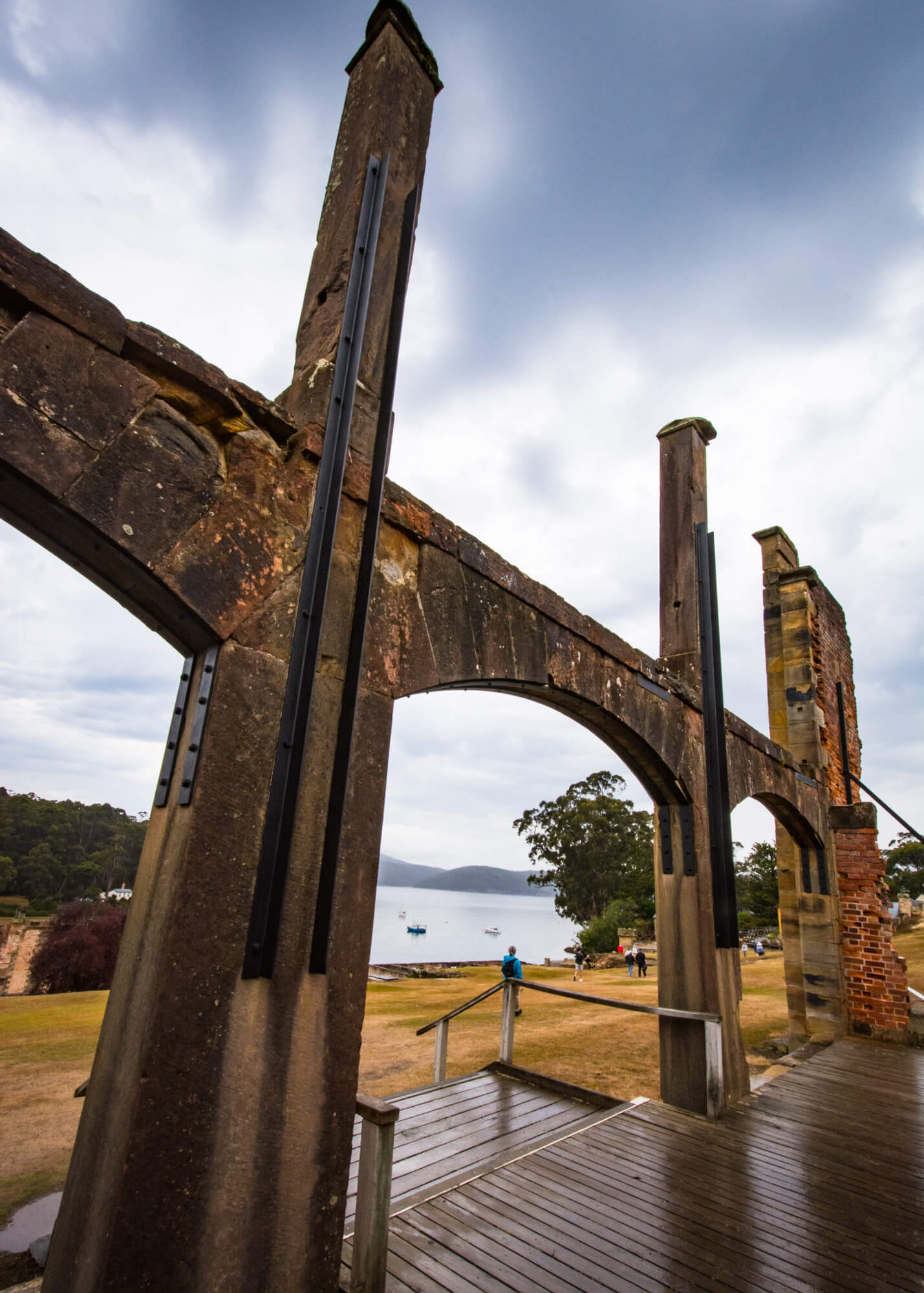
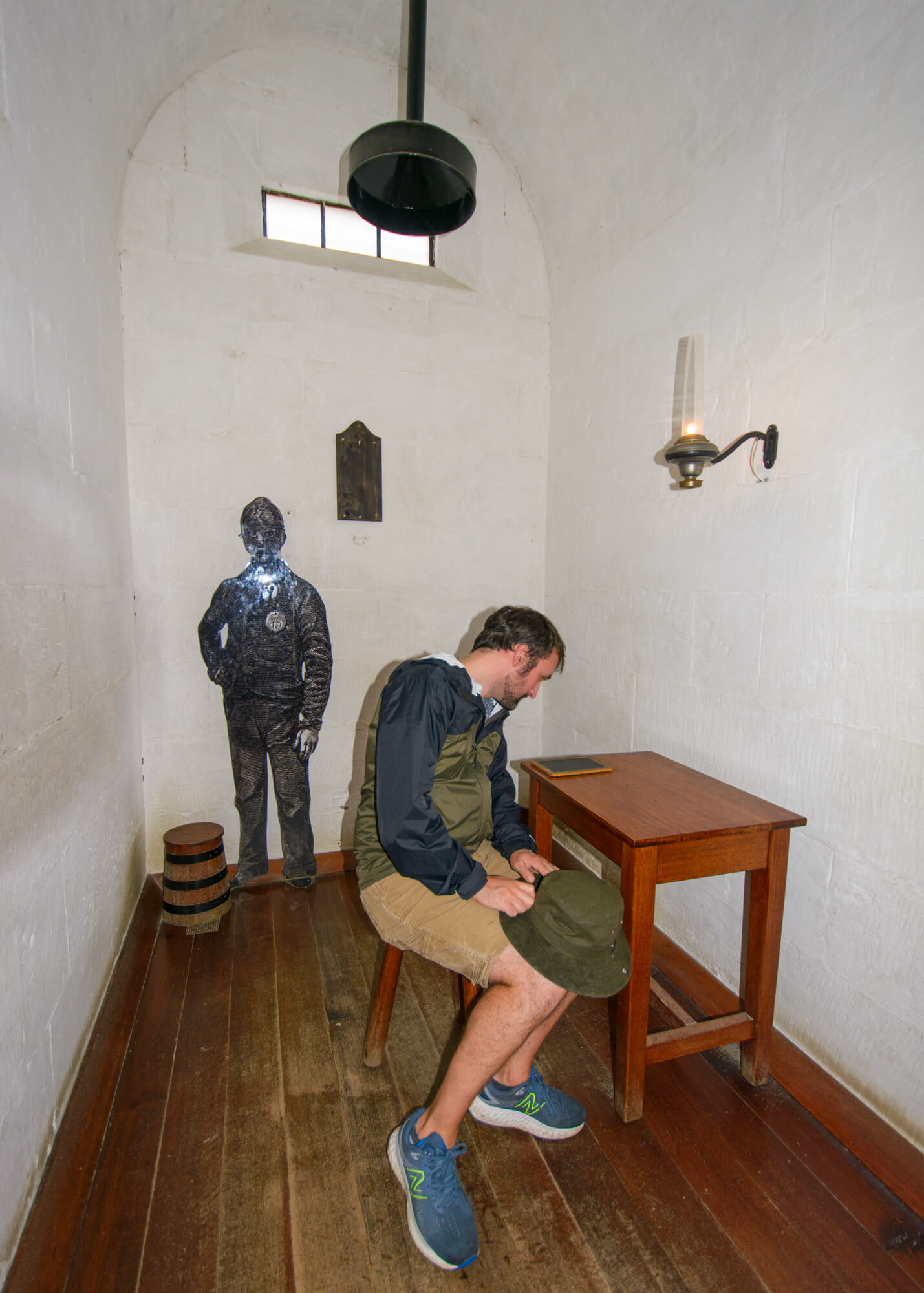
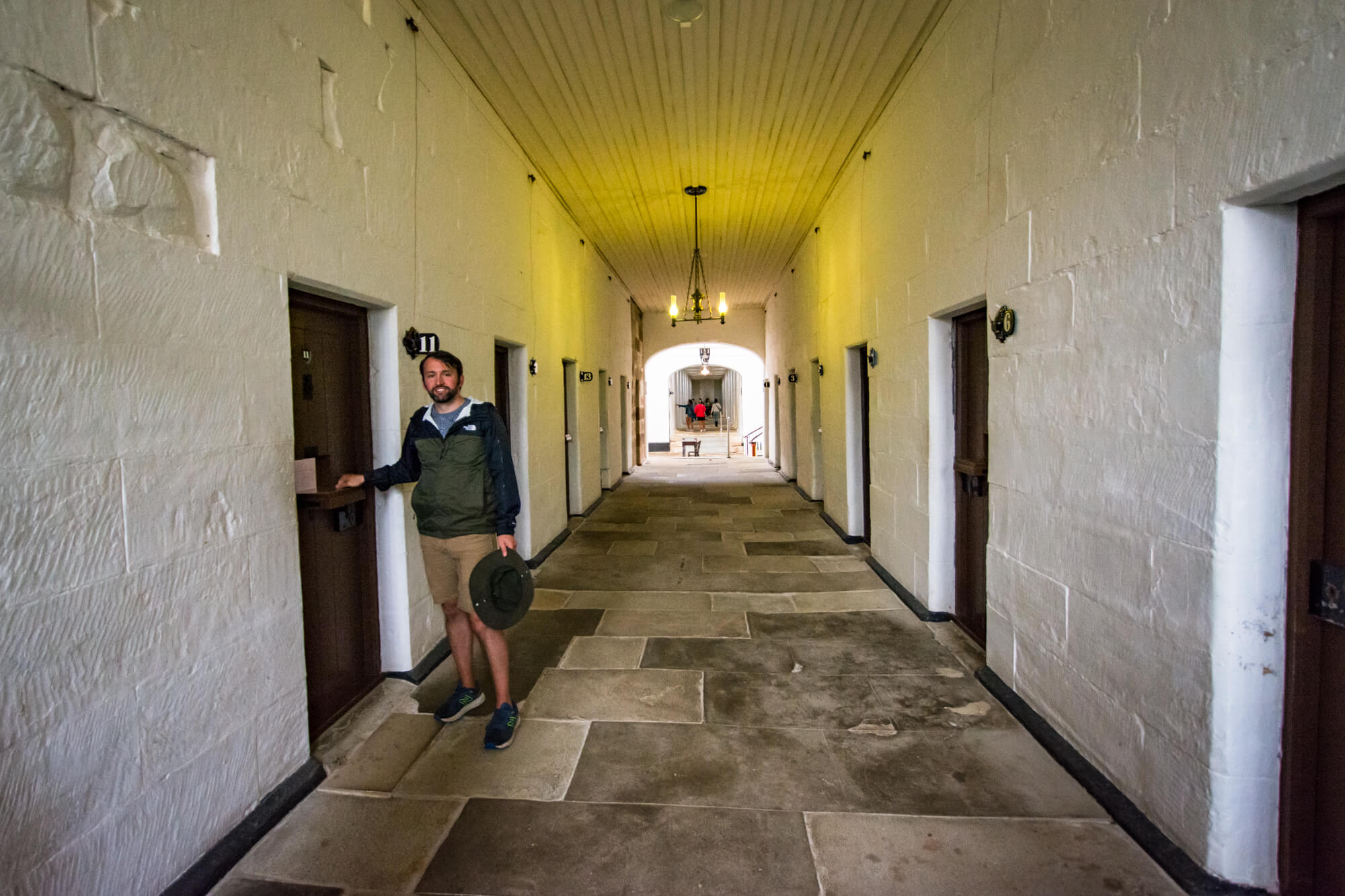
Andy got to see what life was like as a convict in one of the tiny cells, though this building wasn’t even the worst of them.
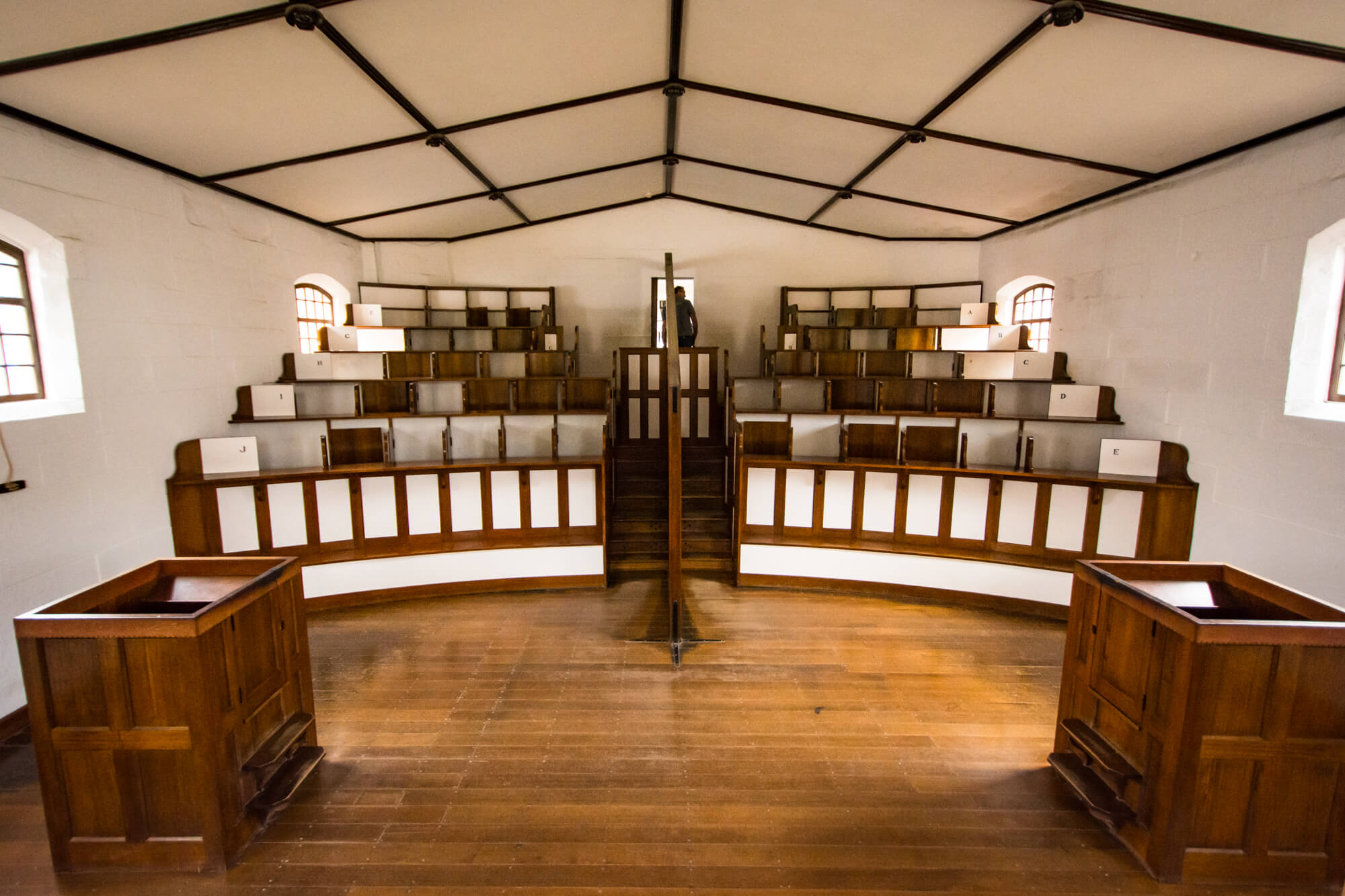
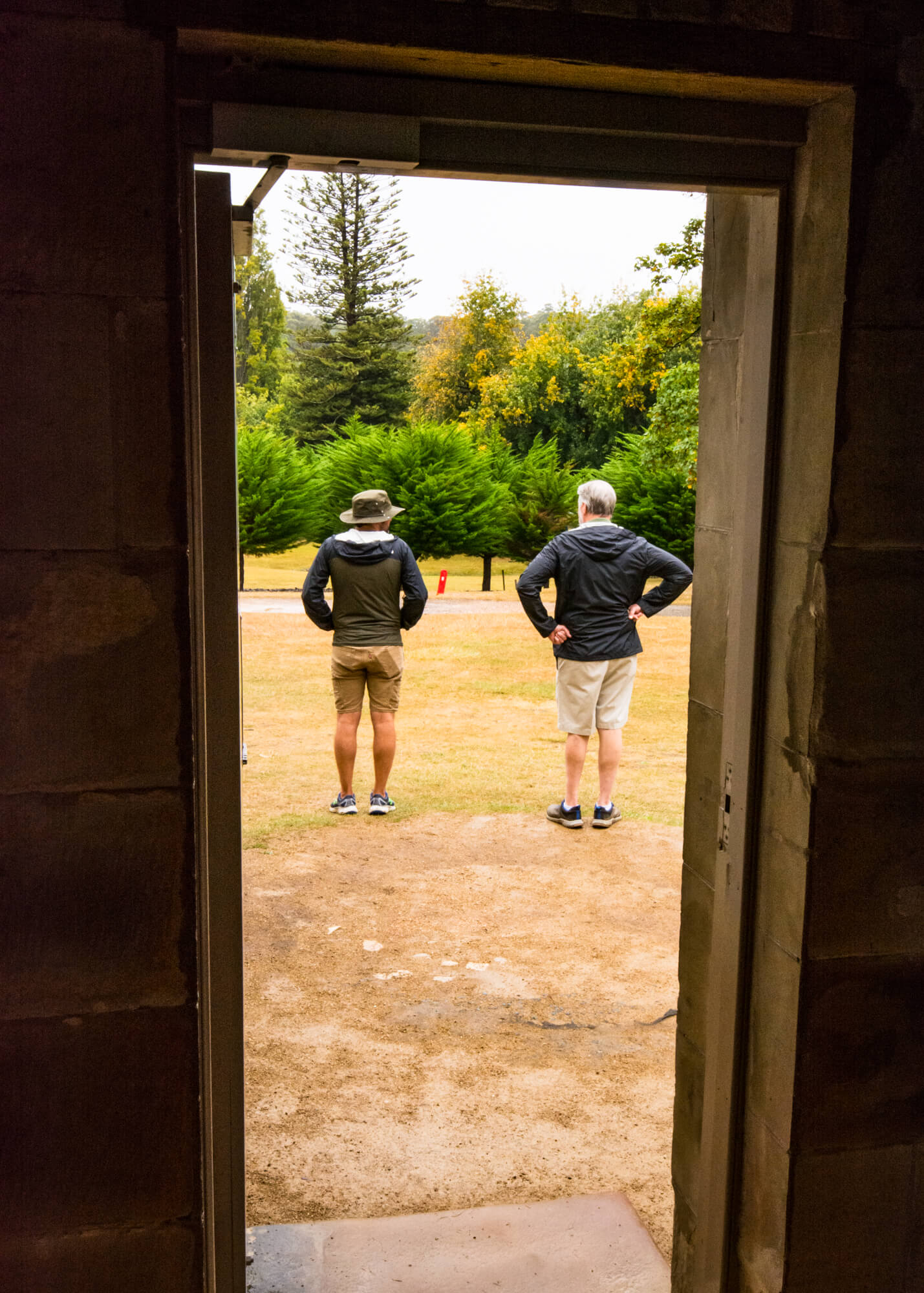
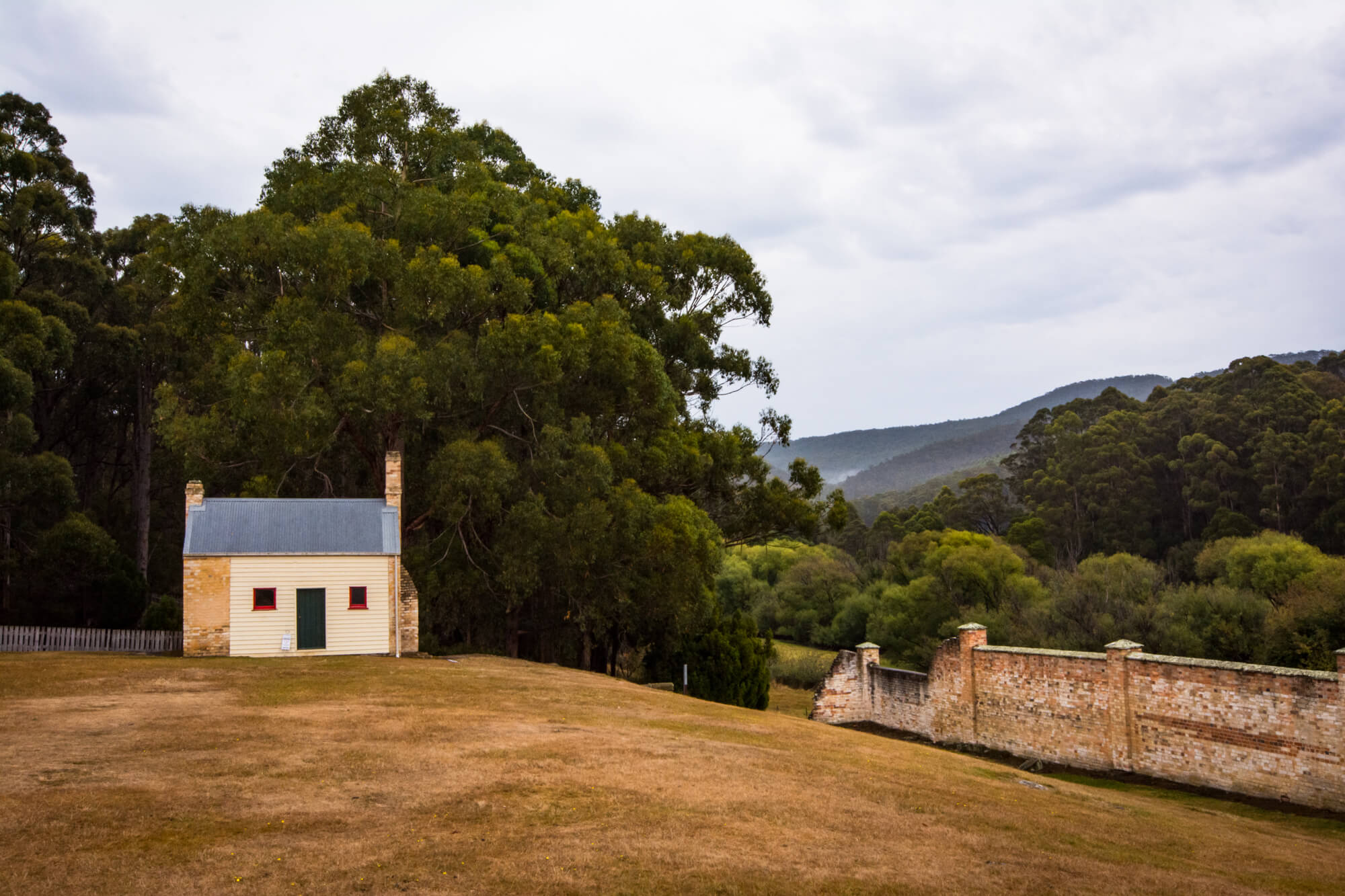
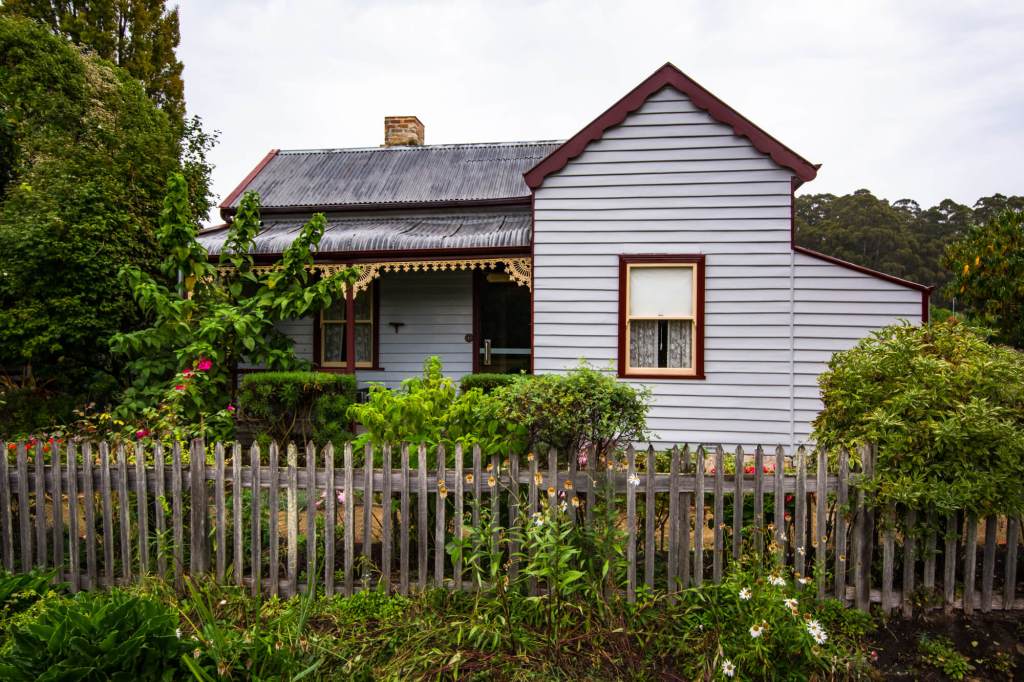
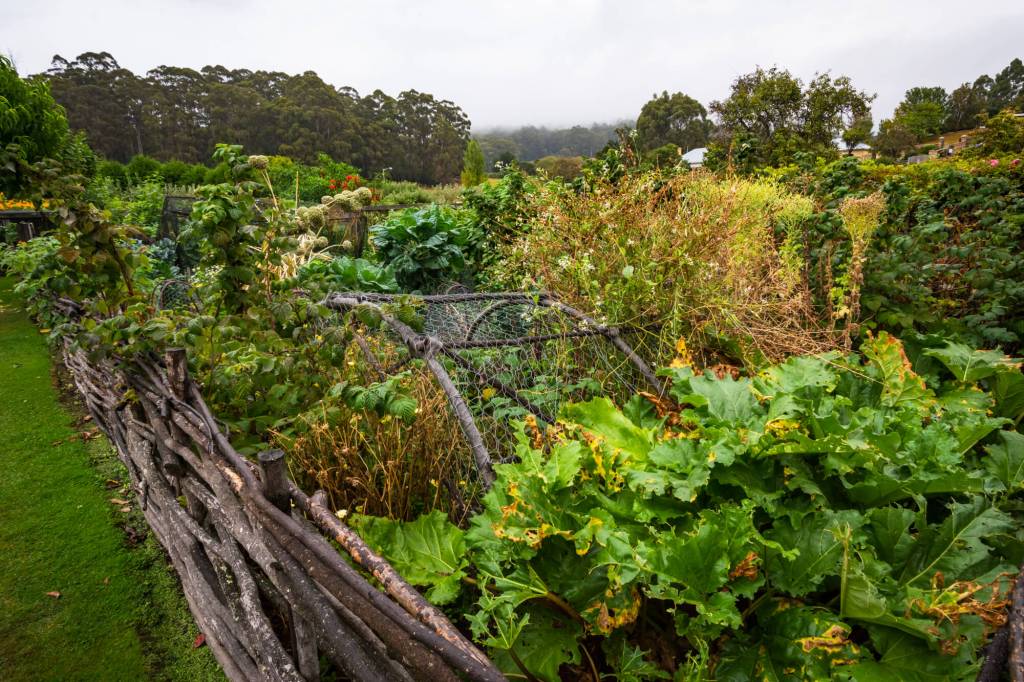
For those that worked on the site in more privileged roles, life was much more idyllic.
There was even a convict church, whose bones surely rival many of the ruins in Europe.
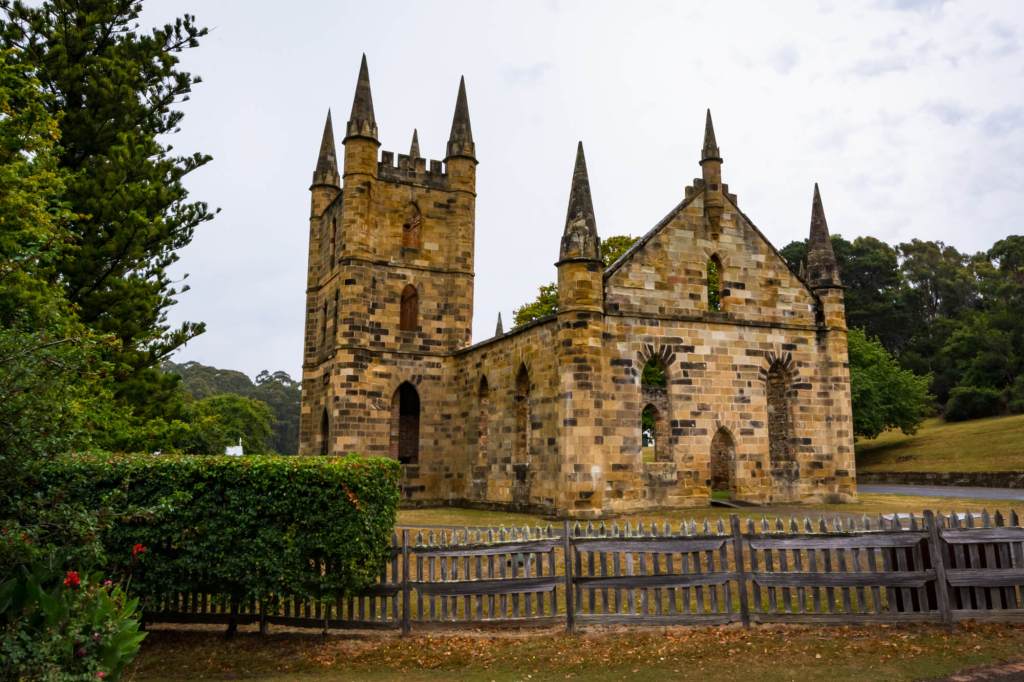
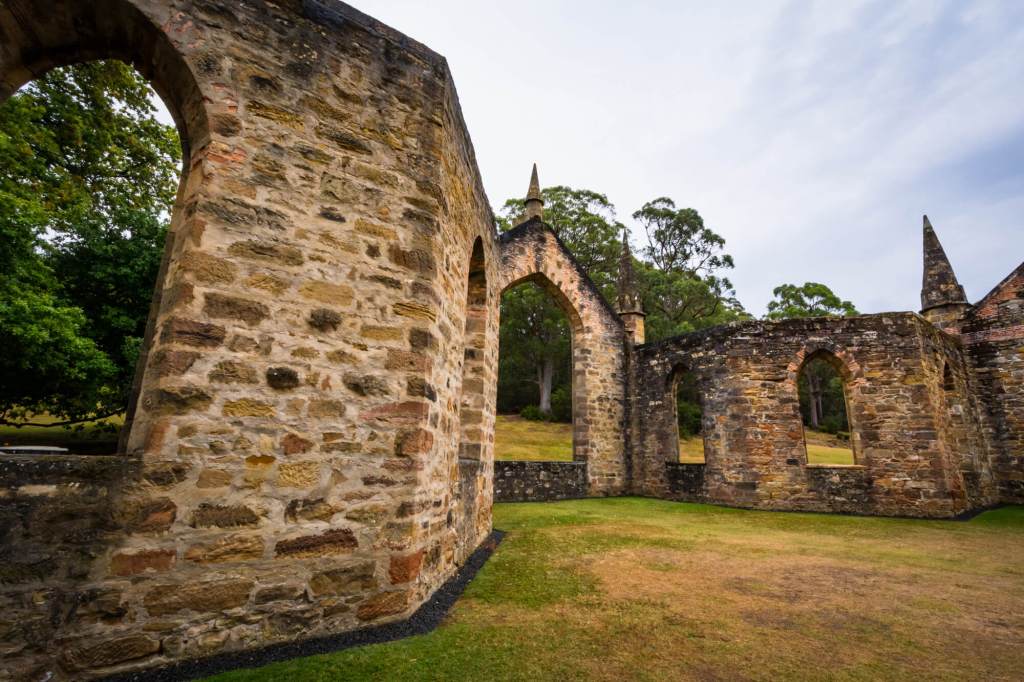
After thoroughly exploring most of the site, we tested our tired legs a little more by wandering along the coast, where ships were built by convicts once upon a time.
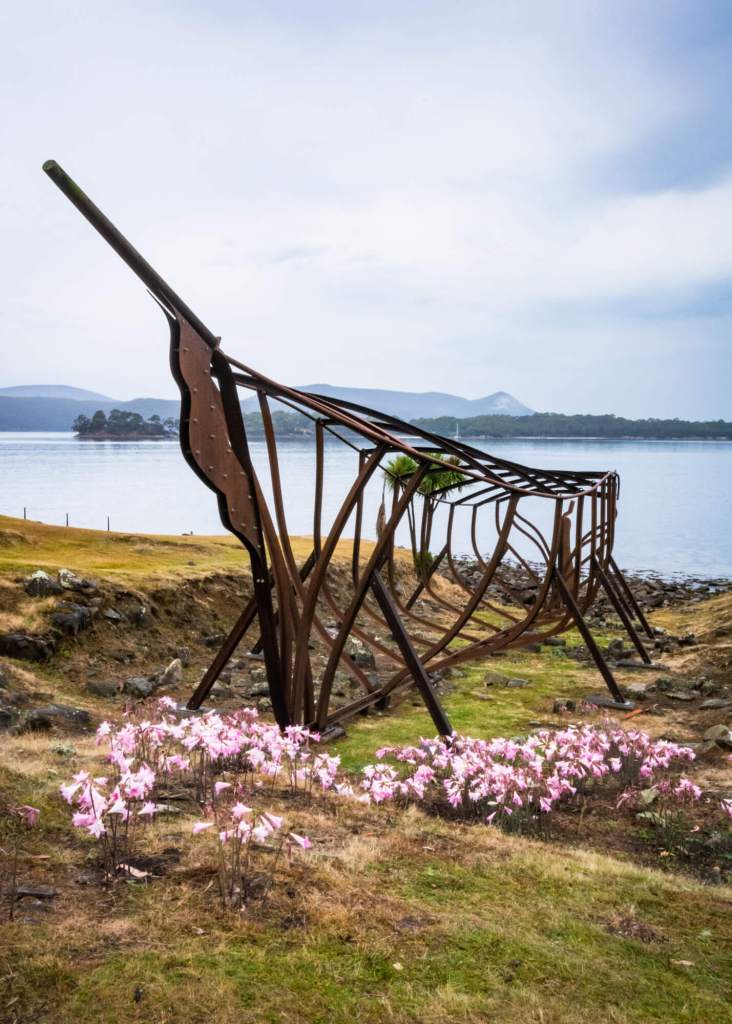
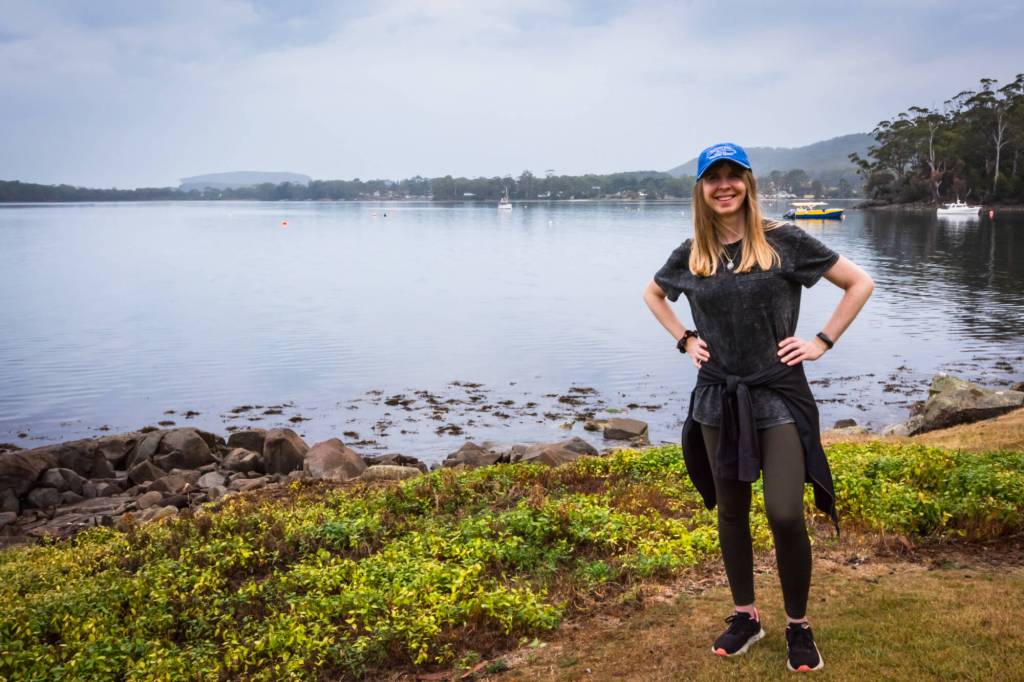
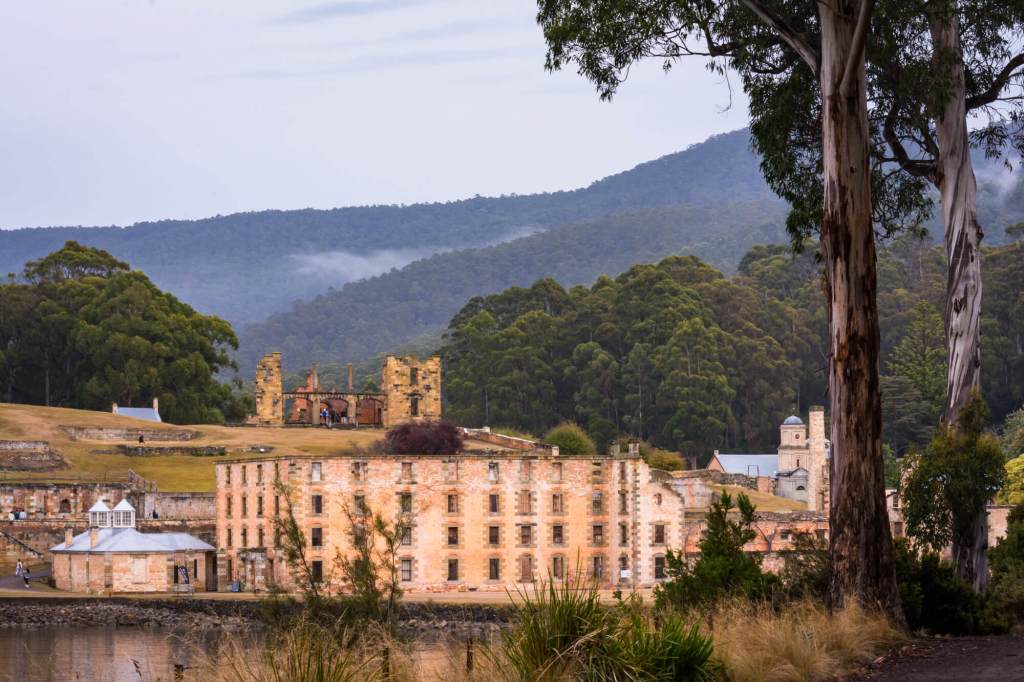
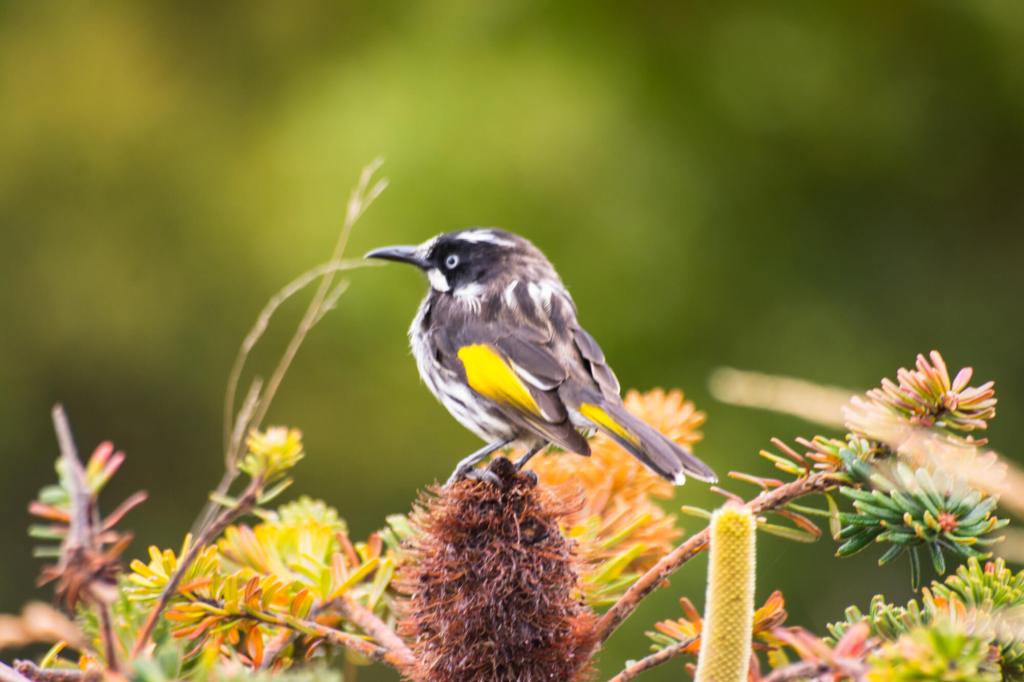
We got one last taste of wildlife, a New Holland honeyeater, before heading back to our accommodation.
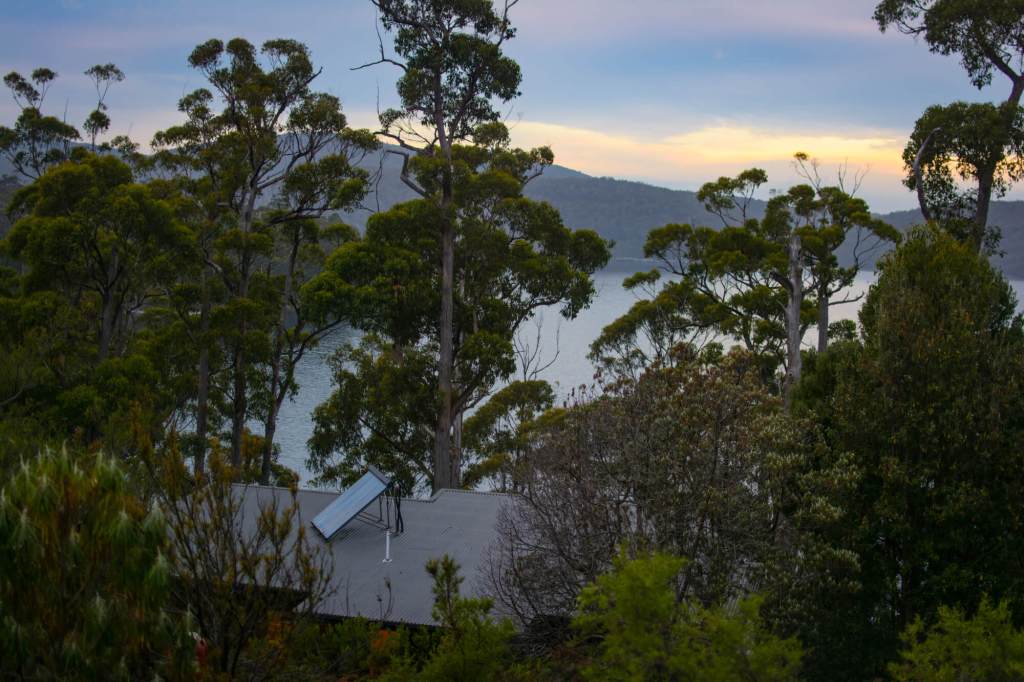
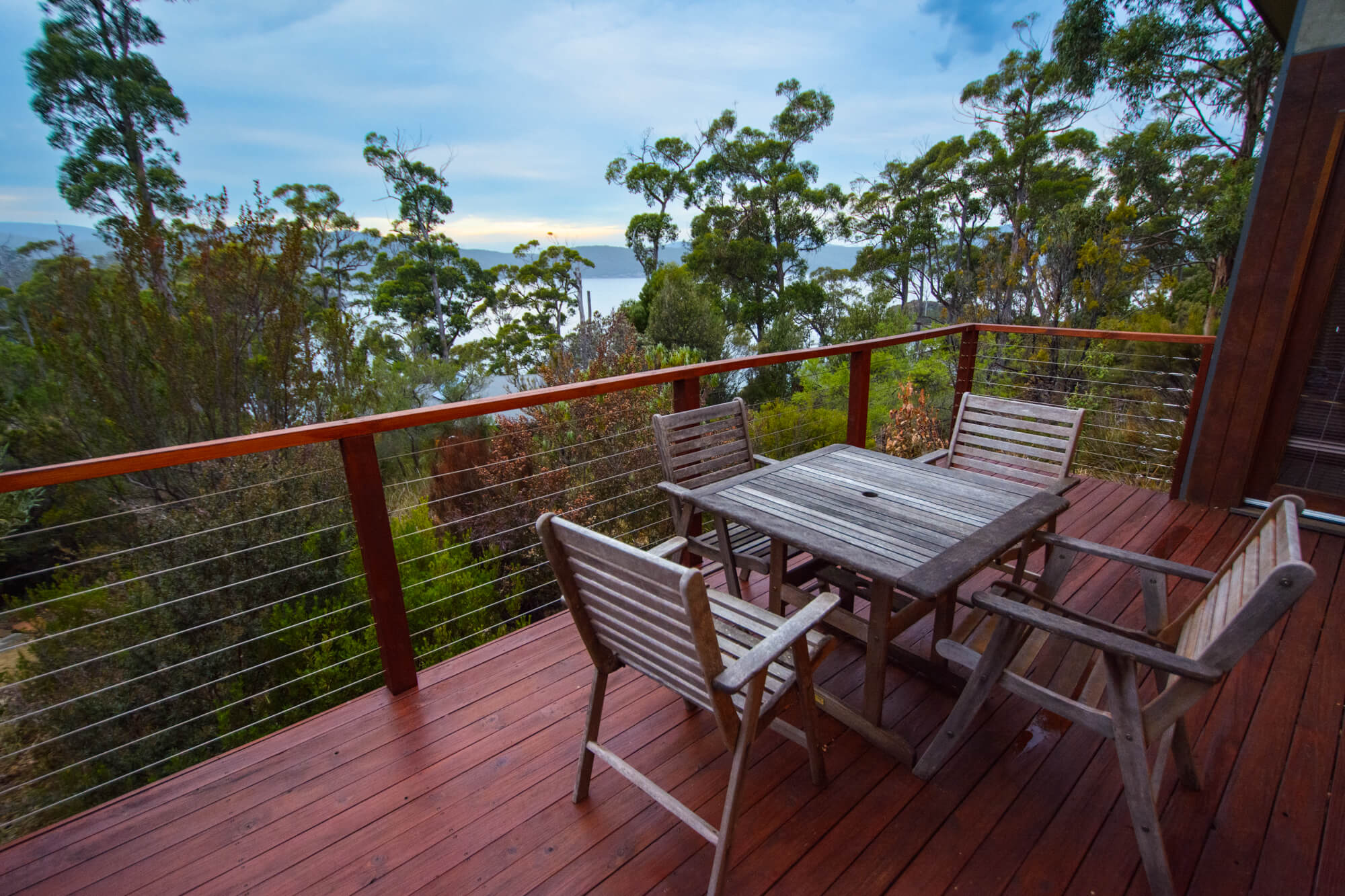
Though we were only here for one night, we could’ve easily stayed longer in our peaceful cabin, with views out over the bay. We had a great dinner at a nearby pub and wandered down to the beach on a dusk walk, looking for wildlife and encountering a lot of pademelons.
Up next, we continue on the road north to Bicheno and beyond. See you soon!
 FlyAllOver